
Silicone molds for resin: Shore A, undercuts, exotherm & production
Engineering guide to custom silicone molds for epoxy and UV resin: Shore A bands, undercuts, exotherm, cavity layout, gloss demold, MOQ 50, prototype 3-7 days. RUUIPON Shenzhen.
 Kyler Yang · Founder5 min read
On this page
Resin brands hit the same wall: catalog trays stick in logo wells, tear at undercuts, or sit at Shore A ~45–50 because “hard looks premium.” Epoxy does not care about the marketing word — it locks into stiff cavities and cloudy letter bottoms. Platinum-cure custom trays fix that with the right flex, draft, and wall thickness before you buy denser tooling.
RUUIPON builds custom silicone resin molds at MOQ 50 per design. Prototypes usually land in 3–7 days after CAD approval; production often follows in a 2–4 week band. Complete RFQs typically get a Shore band and quote within 24 hours.
This guide is the resin engineering pillar. Shorter notes live in epoxy Shore A, geode hardness, and resin design tips. Food chocolate is a different lane — see the chocolate mold guide.
Epoxy vs UV resin — what changes in the mold
Same silicone family can serve both, but the failure modes differ. Spec the resin system on the RFQ so we do not harden a tray for a UV jewelry line that needs peel flex.
| Factor | Epoxy | UV resin |
|---|---|---|
| Heat / stress | Exotherm can soften then grip cavities | Lower heat; thin parts demold early |
| Typical Shore | 20-35 shallow; 25-40 deep/geode | 20-35 for jewelry & thin casts |
| Cure before peel | Often 12-24 h at shop temp | Minutes under lamp — still wait full set |
| Common lock-in | Logo wells, crystal fins, deep floors | Fine filigree, zero-draft bezels |
Deeper compare: UV resin vs epoxy molds.
Shore A by resin geometry
Durometer is a demold number, not a quality badge. Soft enough to peel; firm enough that coaster trays do not flop under fill weight.
| Geometry | Shore A | Why |
|---|---|---|
| Flat coasters / trays | 20-35 | Flex peel; less edge tear |
| Logo / emboss wells | 25-35 | Leave letters without pry sticks |
| Deep geode / crystal fins | 25-40 | Detail + peel path |
| Mild undercut figures | 20-30 | Soft stretch around lock |
| Large flat sheets | 30-40 | Stiffness under resin mass |
| “Hard premium” catalog (~45-50) | Avoid | Locks epoxy; operators pry |
Case notes: epoxy Shore failures · general Shore hardness guide.
Undercuts, draft & when to split the tool
Soft silicone forgives mild undercuts that would lock a hard tray. It does not forgive sharp negative space with zero draft on a deep figure. Decide early:
- Draft 1–3° on walls taller than about 5–8 mm when the show face allows.
- Radius floor-to-wall junctions — epoxy shrink pulls into sharp roots and cracks on demold.
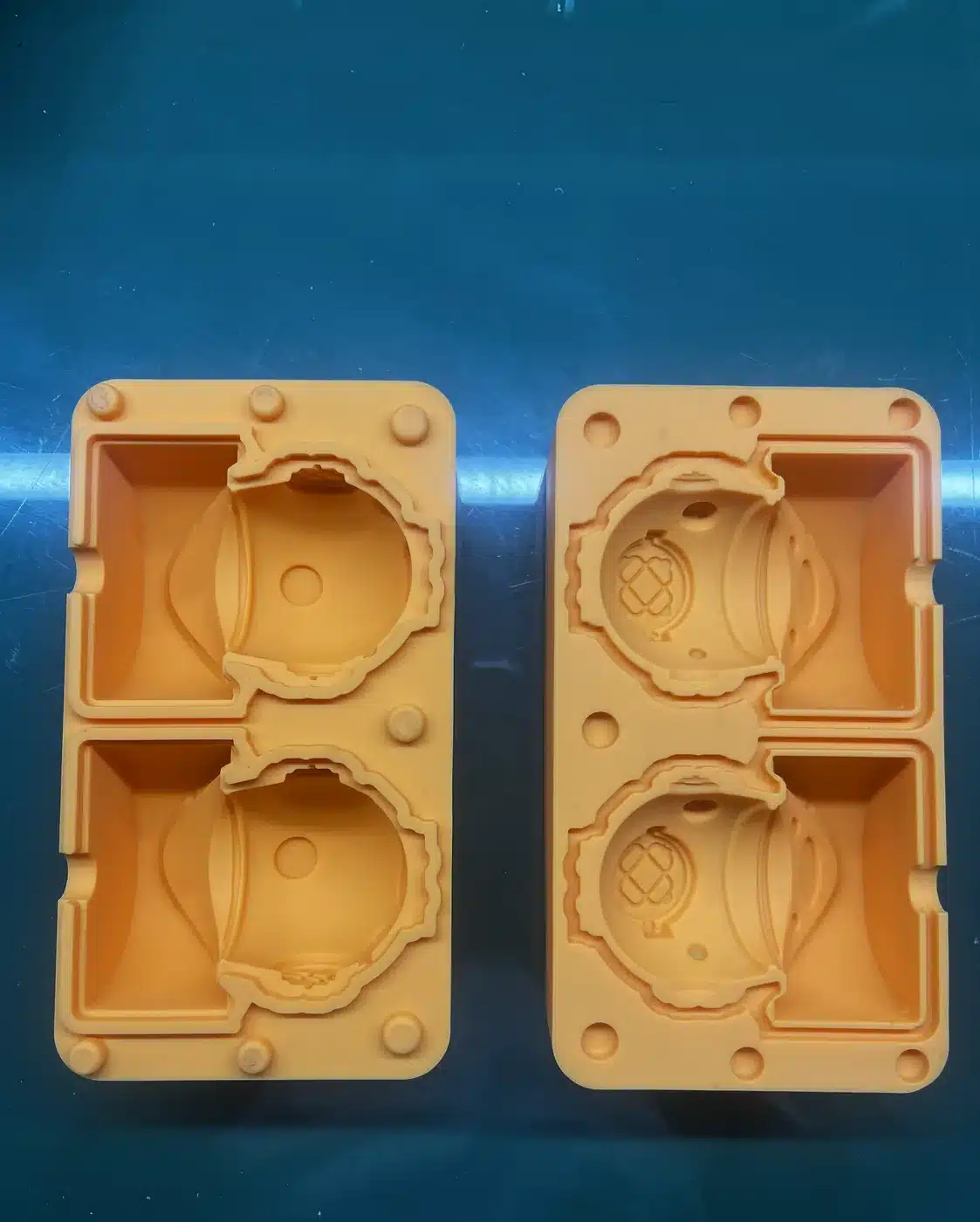
- Two-part molds when undercuts are intentional product features, not CAD accidents.
Detail: undercuts & draft, one-part vs two-part.
Exotherm, cure timing & tray life
Deep epoxy pours spike heat. Soft silicone can temporarily lose support, then grip as the cast cools. That looks like “random stick” on pour 30 when it is actually heat + zero draft + early demold.
- Pour depth vs pot life — name max pour thickness on the RFQ.
- Cure before peel — epoxy often needs 12–24 h at ~22°C; early peel white-stresses fins.
- Platinum-cure for production — better tear life across heat cycles than tin hobby kits. Platinum vs tin.
- Vacuum degas the mold silicone — micro-bubbles print into gloss faces. Vacuum degassing.
Cavity layout for resin trays
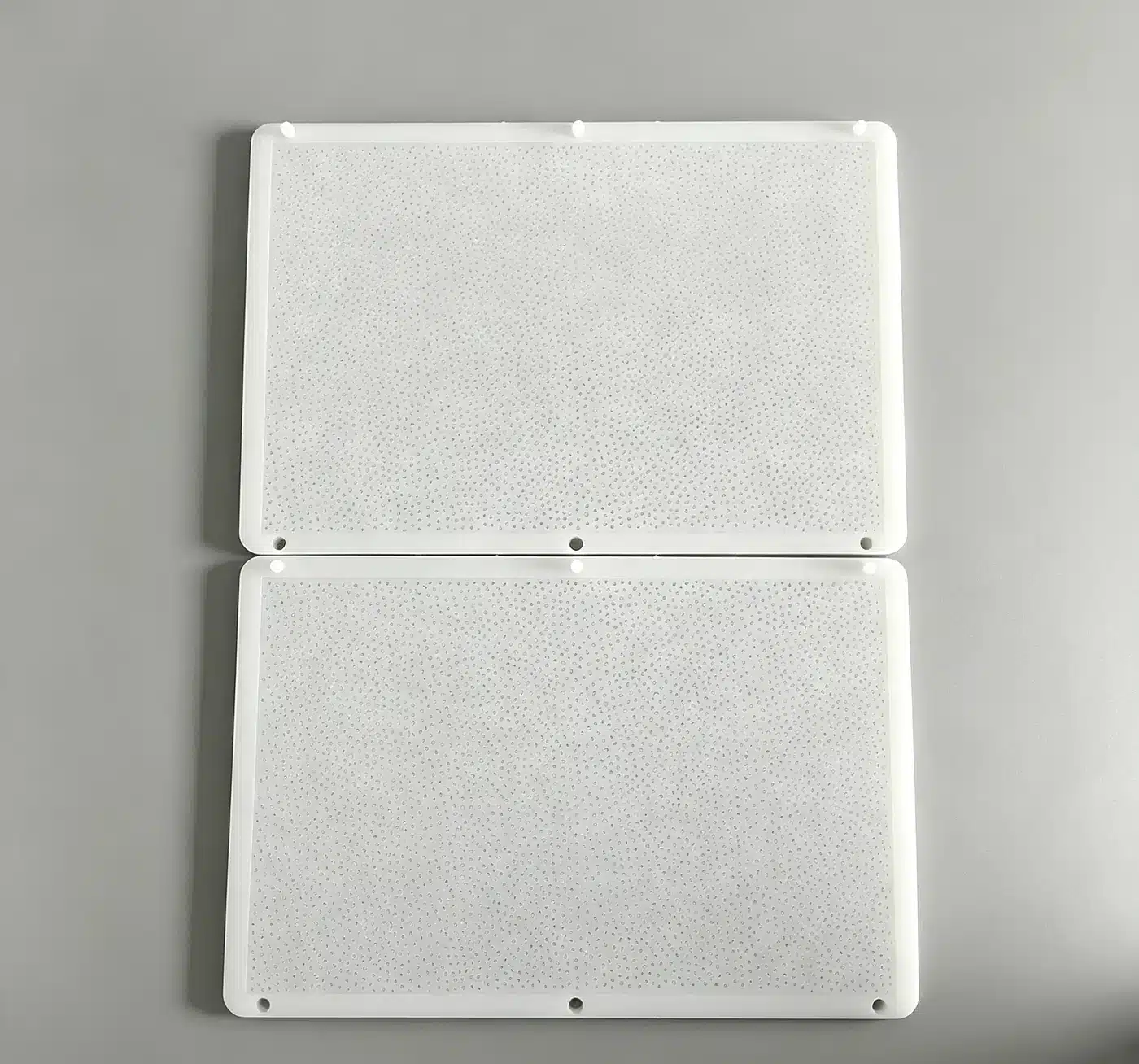
Density is not free throughput. Floppy 24-up sheets warp under resin mass and tear between cavities. Most brand resin lines win on 4–12 cavities with real spacing.
| Layout variable | Typical range | If ignored |
|---|---|---|
| Edge-to-edge spacing | 10-20 mm resin | Web tears; trays flop |
| Outer rim | 12-25 mm | No grip; crushed edge cavities |
| Cavity count start | 1-6 then scale | Remake whole dense sheet |
| Sheet span | Match pour method | Warp under thick epoxy |
Wall thickness & surface finish
Cavity walls 2.5–5 mm
Survive hundreds of epoxy peels. Under ~2 mm tears at the lip.
Ready to order custom silicone molds?
Free quote for OEM/ODM projects. MOQ 20 · Prototype 3-7 days · FDA/LFGB available.