
Custom Baking Mold Heat Limits: Oven Temps Silicone Can Actually Handle
Custom silicone baking mold heat limits - continuous oven temps, peak exposure, Shore A for release, FDA/LFGB grades, and RUUIPON specs for MOQ 50 production baking trays.
 Kyler Yang · Founder5 min read
On this page
Your Shopify baking SKU fails when the mold warps at 220 °C or smells chemical on first use - heat limit is a spec, not a marketing line. RUUIPON builds custom silicone baking molds at MOQ 50 with prototypes in 3-7 days. This guide states continuous oven temps platinum food silicone actually tolerates, how Shore A and wall thickness interact, and what to put on your PO.
Quick answer: Platinum-cure food-grade silicone for baking is typically rated −40 °C to +230 °C continuous on the data sheet - practical safe zone for repeated production is 180-220 °C depending on cavity depth, wall thickness 2.5-5 mm, and bake duration. Above 230 °C or empty-bake ("dry firing") the tray degrades in one cycle. Tin-cure and craft silicone is not oven-safe.
What "Heat Limit" Means on a Custom Baking Mold
Heat limit is the temperature at which the silicone network stays dimensionally stable and does not off-gas plasticizers or breakdown products into food. It is not the same as "will not melt" - silicone can soften and creep before it burns.
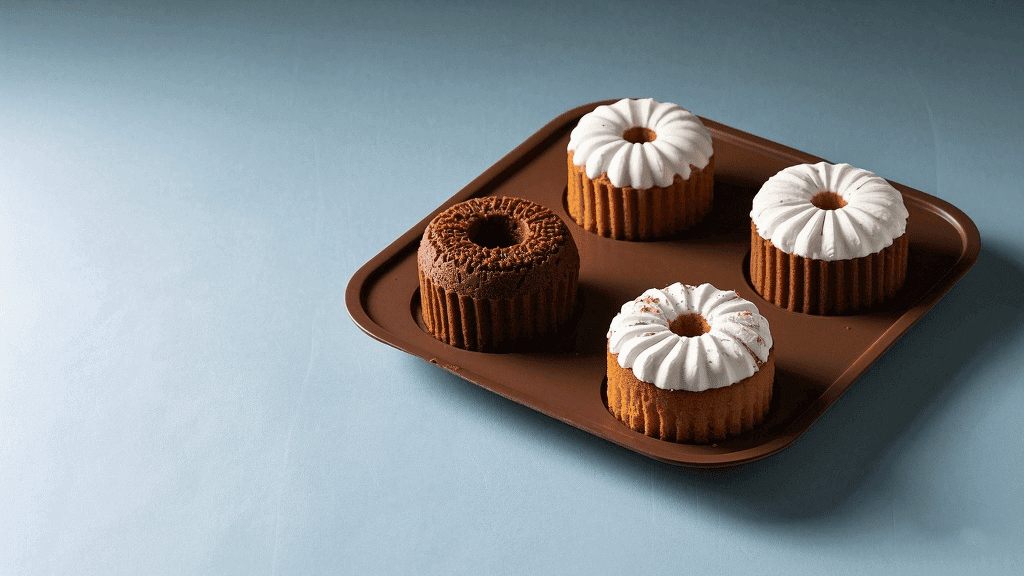
| Exposure type | Typical safe range | Risk if exceeded |
|---|---|---|
| Continuous bake (filled) | 180-220 °C | Softening, cavity creep, shrink drift |
| Short peak (≤15 min) | Up to 230 °C on thick trays | Edge browning of silicone, odor |
| Empty mold in oven | Never | Local hot spots >250 °C - permanent warp |
| Broiler / open flame | Never | Immediate damage |
| Microwave | Only if no metal insert | Arcing if metal clip present |
Rated Temps vs What Your Line Runs
Supplier datasheets quote maximum service temperature on test plaques - not on a 12-cavity muffin tray with 3 mm webs.
- Data sheet max - often 230-250 °C for platinum food silicone.
- Production recommendation - stay 10-20 °C below max for runs >30 minutes.
- Convection vs static - convection transfers heat faster; reduce temp 5-10 °C vs recipe on metal pan.
- Repeated cycles - 500+ bakes slowly harden Shore A; demold gets harder before visible crack.
Full food-grade context: custom baking mold food-grade guide. Certification: FDA vs LFGB.
Shore A, Wall Thickness & Cavity Depth
Heat softens silicone - stiffer trays resist creep but need more flex for demold.
| Shore A | Oven behavior | Demold at 180 °C+ |
|---|---|---|
| 20-25 | Best release on delicate bakes | Wait full cool-down - hot demold tears |
| 25-35 | Balanced - most production baking trays | Can flex warm if walls ≥3 mm |
| 35-45 | Less creep under load | Harder pop on deep cavities |
Wall thickness 2.5-5 mm between cavities; spacing 8-20 mm prevents hot thin bridges from curling. Deep bundt-style cavities hold heat longer - treat internal surface as higher effective temp. Shrink ~0.1% on cure - dimension at room temp, not at 200 °C. Tolerance & shrinkage.
Food-Grade Requirements for Oven Molds
Heat limit without food certification is useless for commercial baking.
- Platinum cure only - tin-cure releases byproducts unsuitable for food. Platinum vs tin.
- FDA 21 CFR or LFGB test report - request migration test doc on PO.
- No post-production release spray - food trays demold by geometry and Shore A, not aerosol.
- Pigment - food-safe colorants only if colored tray; natural translucent is default QC. Pigment options.
Grade selection: choosing silicone grade. Cleaning after bake: cleaning & storage.
Heat Limits by Baking Application
| Product | Typical oven temp | Mold notes |
|---|---|---|
| Muffins / cupcakes | 160-190 °C, 18-25 min | Shore A 25-30, 6-12 cavities |
| Madeleines | 180-200 °C, 10-14 min | Shell detail - vacuum degas on mold pour |
| Financiers / bars | 170-185 °C | Flat sheet, spacing 12-20 mm |
| High-sugar tarts | 175-190 °C | Sugar caramelizes - clean cavities between runs |
| Freezer-to-oven (rare) | Verify −40 °C rating on same compound | Thermal shock test on prototype |
Layout density: multi-cavity layout. Prototype bake test in 3-7 days before MOQ 50.
Production Spec at MOQ 50
| PO line | Example |
|---|---|
| Material | Platinum food silicone, FDA/LFGB documented |
| Service temp | Continuous to 220 °C, peak 230 °C ≤15 min |
| Shore A | 25-35 |
| Geometry | Walls 2.5-5 mm, spacing 8-20 mm, draft ≥3° |
| Process | Vacuum degassed pour, ~0.1% shrink accounted in CAD |
Production ~2-4 weeks after sample approval. [email protected] | Contact RUUIPON | WhatsApp +86 135 3006 2969.
Common Heat Limit Mistakes
- Using resin-grade silicone for oven - not food certified; may off-gas.
- Preheating empty mold - tray reaches datasheet max without batter as heat sink.
- Thin 1.5 mm webs to fit more cavities - curls after 20 bakes.
- No cool-down before stack storage - hot tray stacked warps - storage guide.
- Assuming metal-pan recipe times - silicone insulates; bake time may +2-5 min.
Cost context: mold cost guide. Lifespan: lifespan & care.
Frequently Asked Questions
What is the maximum oven temperature for silicone baking molds?
Platinum food silicone is typically rated to 230 °C continuous on datasheet; RUUIPON recommends 180-220 °C for production baking trays with repeated use.
Can silicone baking molds go in the dishwasher?
Top rack ≤65 °C is usually fine for food-grade trays; harsh caustic detergents dull cavity finish over time.
Does color affect heat limit?
Food-safe pigments within supplier load limits - no meaningful change if compound is rated 230 °C.
Why did my mold smoke in the oven?
Almost always wrong silicone grade, contamination, or empty over-temp bake - not normal on certified food platinum.
What is MOQ?
MOQ 50 per approved baking design.
Prototype timeline?
3-7 days after CAD - include one oven bake validation before production PO.
Silicone vs metal for high-volume bakery?
Metal for >300 °C and abrasive scrub; silicone for custom shape, easy demold, MOQ 50 brand SKUs.
Ready to order custom silicone molds?
Free quote for OEM/ODM projects. MOQ 20 · Prototype 3-7 days · FDA/LFGB available.