
How to Choose Cavity Count for Custom Gummy Molds
Pick gummy mold cavity count from piece grams, tray OD, pour method, and scrap risk — not the densest grid that fits. RUUIPON MOQ 50 soft tooling guide.
 Kyler Yang · Founder5 min read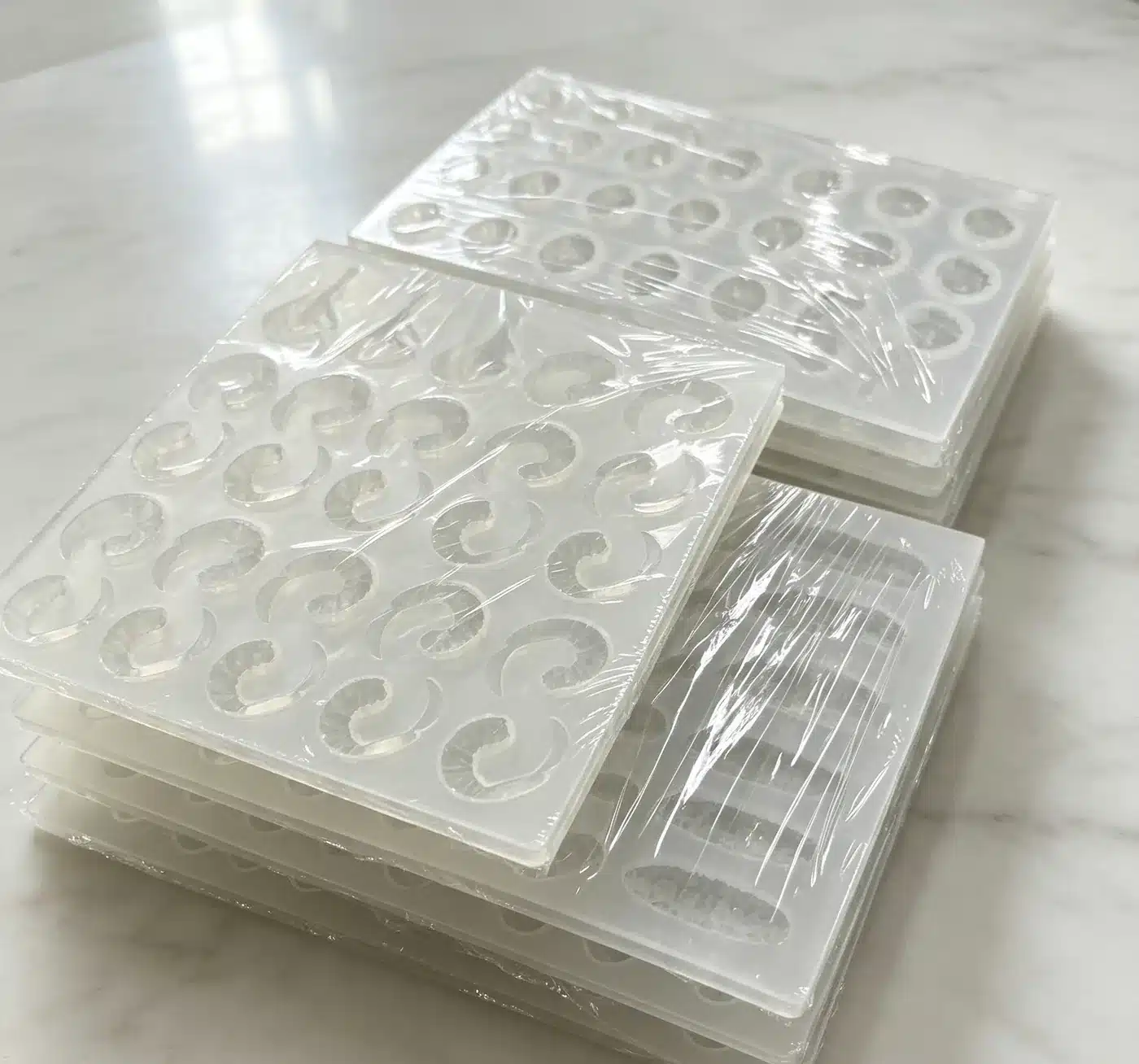
On this page
A nutraceutical brand sent us a tray sketch with 120 tiny cavities on a sheet that barely cleared their scraper. Piece target was 5 g. After week one they were chasing light corners, bowed ribs, and a depositor pass that never matched the drawing. The problem was not “more cavities = more output.” It was cavity count chosen without tray OD, nozzle pitch, or scrap math.
This guide is how we choose gummy mold cavity count for brand soft tooling at RUUIPON — Shenzhen since 2018, MOQ 50, prototype usually 3–7 days after CAD lock. It is not the fill-weight / ml post (gummy mold cavity volume) and not the spacing/rib layout post (multi-cavity layout). Count first; then volume and layout.
The Densest Grid Is Not the Win
Catalog photos reward tight grids. Shop floors reward trays that fill evenly, demold without tears, and stay flat under scrape. Packing 80 cavities onto a soft tray that wants 36 often means:
- Ribs too thin → tray bows → corner cavities run light.
- Edge clearance gone → nozzle or scraper hits the lip.
- Operators slow demold → you “gain” cavities and lose minutes per pour.
We build custom silicone gummy molds for brand and maker runs — quote ~24h on complete briefs. High-volume steel / mogul CapEx is a different lane; say so on the RFQ if that is the real path.
Four Inputs Before You Count Cavities
- Finished piece grams (or target ml) — locks cavity volume later; today it sets how large each pocket is on the tray.
- Tray outer size you can actually handle or fit under the pour method (hand pour, flood-and-scrape, or a depositor pitch you will name).
- Pour method — hand pour tolerates fewer, larger cavities; flood-and-scrape needs rib stiffness and edge margins; depositors need pitch and row count that match nozzle notes (we do not claim brand-specific depositor fit without your specs).
- Weekly piece target — cavities × pours/shift × shifts, minus a scrap allowance. If scrap is 15% on a dense tray, a slightly lower count with clean demold often wins.
Grams ↔ ml helper: gummy cavity weight tool. RFQ fields: silicone mold RFQ checklist.
Practical Count Bands for Brand Runs
These are planning bands for soft silicone trays — not a catalog SKU list. Exact count comes from CAD after you lock grams and tray OD.
| Piece size (typical) | Common count band | Notes |
|---|---|---|
| ~2–4 g micro / logo bites | ~24–72+ | Watch logo islands and thin walls; density rises scrap risk |
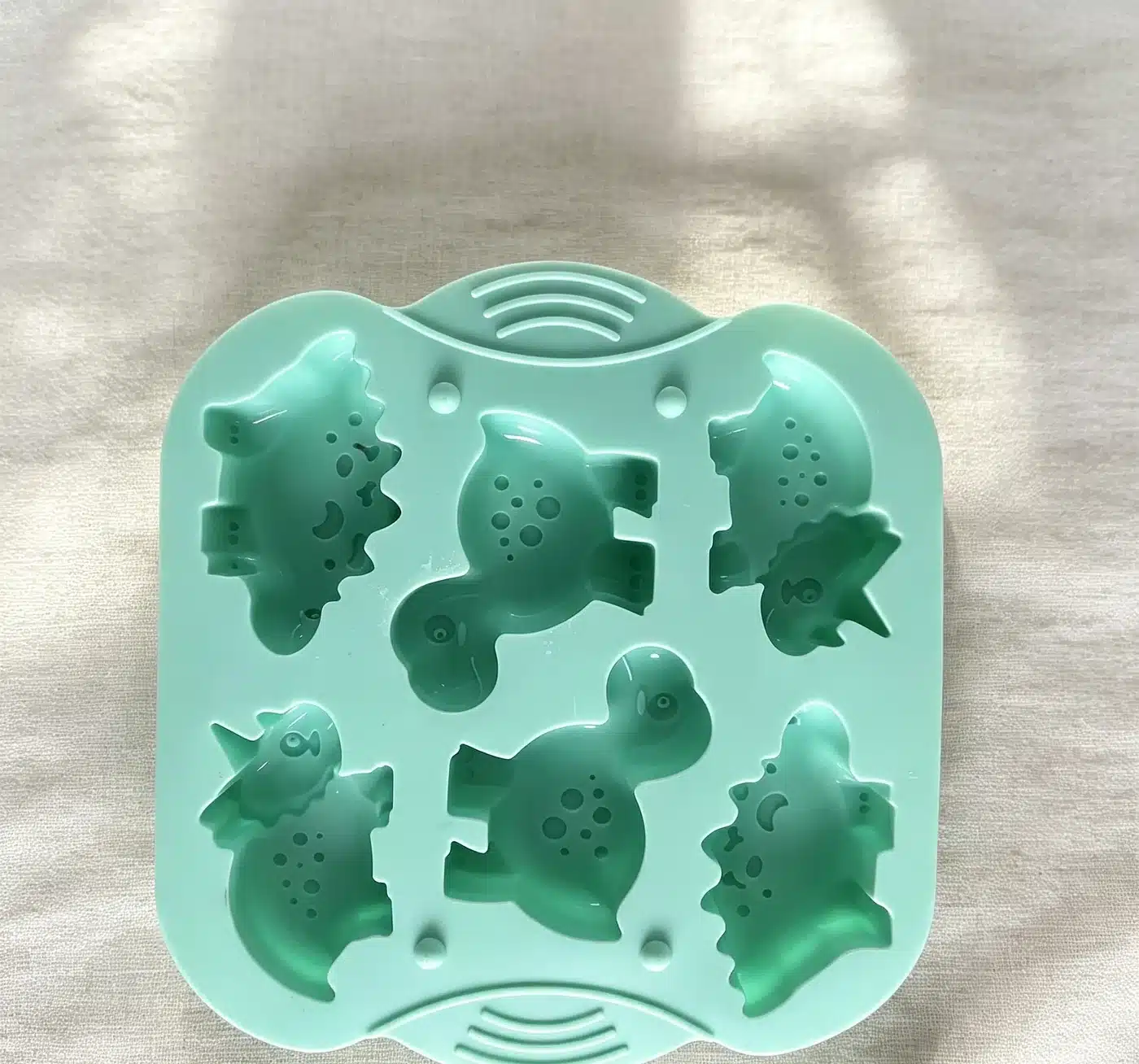
| ~5–10 g standard gummies | ~12–48 | Most brand first trays land here |
| ~12–20 g larger pieces | ~6–24 | Fewer cavities; thicker ribs help scrape |
| Mixed shapes on one tray | Keep row logic simple | Normalize volume across shapes or training error climbs |
Ranges are conditional: Shore, undercuts, and pectin stickiness change how many cavities you can staff cleanly. Softer Shore for deep undercuts often wants fewer cavities so demold does not cascade tears — see Shore hardness guide.
Output vs Scrap Tradeoffs
| Choice | Upside | Downside if overdone |
|---|---|---|
| Higher cavity count | More pieces per pour | Bow, light corners, slower demold, more tear scrap |
| Lower cavity count | Stiffer tray, cleaner teach | More pours to hit weekly volume |
| Two tray SKUs (A/B shapes) | Simpler training | Two tools to reorder — plan MOQ 50 each |
Worked example (planning only): 5 g pieces, 30 cavities, 20 pours/shift, 1 shift → 600 pieces/day before scrap. If scrap/rework is 12% on a 48-cavity bowing tray but 3% on a 30-cavity tray, net good pieces can favor the “smaller” count. We confirm with your sample pour — not with a slogan tolerance.
Sample Gate Before You Multiply Trays
Before you jump from one sample tray to MOQ 50 of a dense design, write three gates into the approval email:
- No cavity needs a pry tool on demold after a re-teach.
- Corner vs center piece weight stays inside the band you agree on sample (measure with your formula).
- Tray stays flat enough that your scrape or pour method does not leave a systematic film on one side.
Prototype timing is commonly 3–7 days after CAD lock on suitable jobs. Production soft tooling often follows in about 2–4 weeks after written approval — exact timing depends on quantity and queue. Path: after you approve the sample.
What to Put on the RFQ
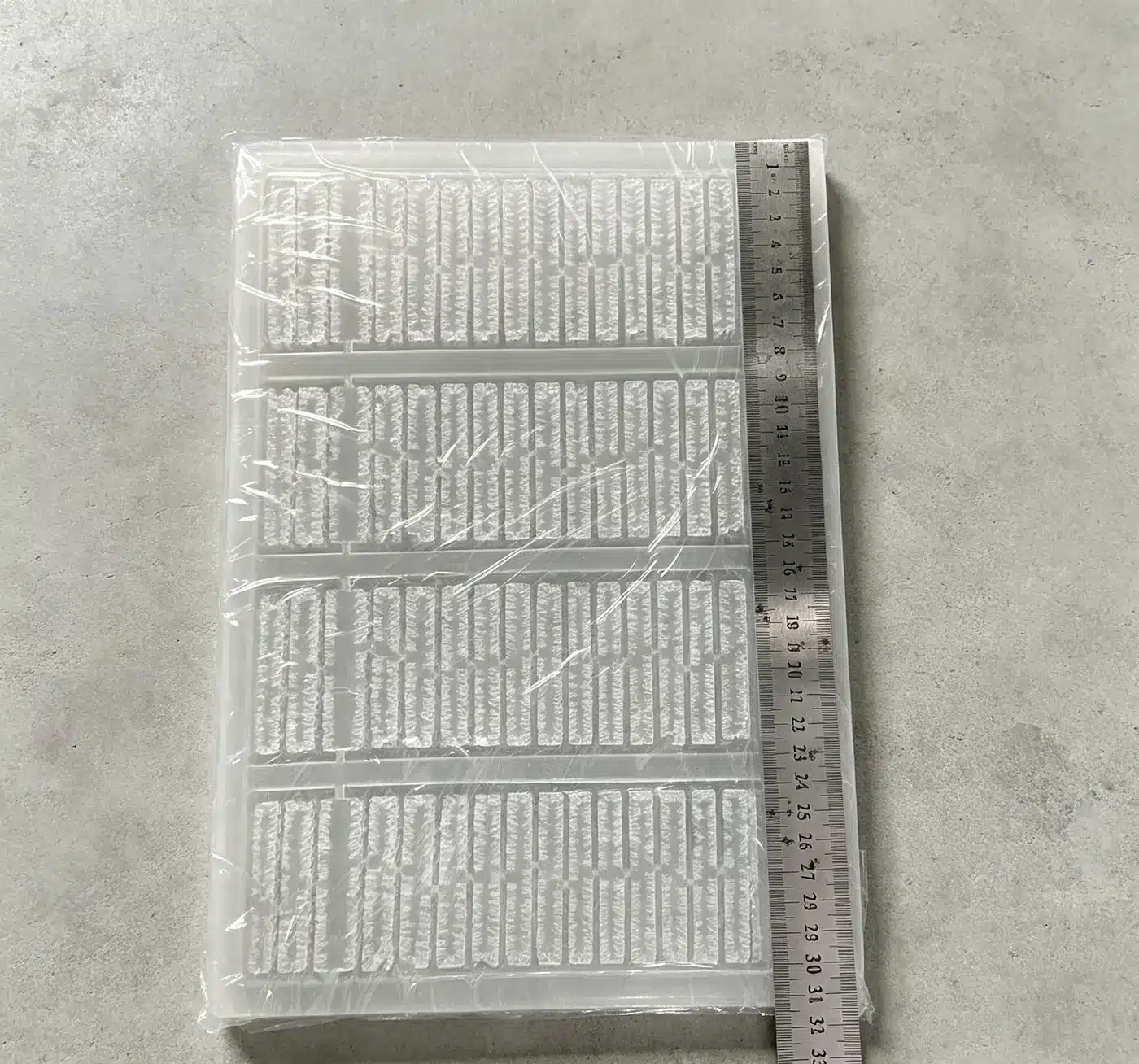
Send target grams, preferred tray OD (or “recommend”), pour method, weekly piece goal, Shore “recommend for demold,” and whether logos need emboss depth notes. Optional ~$110 drawing deposit on serious RFQs so you mark cavity CAD before tooling balance. Quote: custom silicone mold quote or contact.
Food-contact path when retail asks: food-grade silicone molds. Brand MOQ context: gummy mold brand MOQ 50 guide.
FAQ
Is there a universal best cavity count?
No. Count follows grams, tray size, pour method, and scrap. We refuse densest-grid quotes that ignore your OD notes.
Can I start low count and add cavities later?
Usually that is a new layout / new tool. Plan the first tray for the pour you will staff for 90 days.
What is MOQ at RUUIPON?
MOQ 50 mold pieces per design after sample approval.
How fast is the quote?
Complete RFQs usually within about 24 hours — email [email protected] or WhatsApp +86 135 3006 2969.
Ready to order custom silicone molds?
Free quote for OEM/ODM projects. MOQ 20 · Prototype 3-7 days · FDA/LFGB available.