
Silicone vs Polycarbonate Chocolate Molds: Which to Buy First
Silicone vs polycarbonate chocolate molds for brands deciding first tooling - shine vs flex demold, logo depth, MOQ 50 path, and when to stay on PC sheets.
 Kyler Yang · Founder6 min read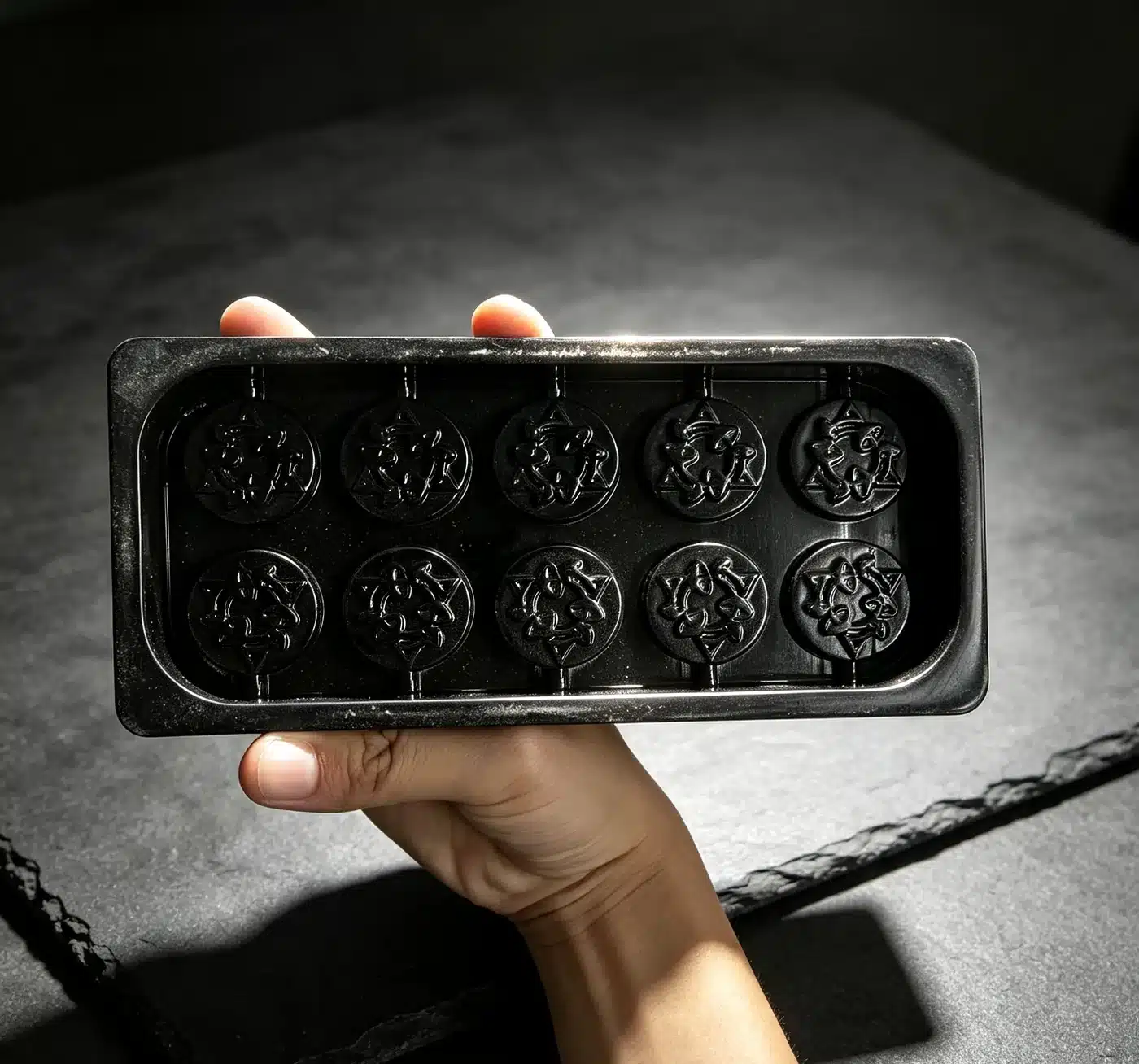
On this page
A small chocolate brand emailed us after ordering polycarbonate sheets for a deep logo bar. The PC looked gorgeous empty. Tempered couverture stuck in 0.8 mm letter wells, operators tapped harder, ears chipped, and weekend farmers-market stock ran short. They did not have a temper problem. They bought a rigid snap tool for a geometry that wanted a flex peel.
Silicone vs polycarbonate is not a beauty contest. It is a demold method decision. Pick wrong and you fight the cavity every pour. Pick right for the first SKU and you can still migrate later when volume justifies it.
You Are Not Choosing "Better Chocolate" - You Are Choosing Labor
Polycarbonate trains operators to fill, cool, and snap or tap. Silicone trains them to flex and peel. If your team already runs PC for shallow molds, staying on PC for a similar shallow bar can be faster. If your brand mark is deep, undercut, or textured, rigid walls fight release and you pay in scrap and time.
RUUIPON builds custom silicone chocolate molds for brands that need custom geometry at MOQ 50, prototypes in about 3-7 days after CAD approval, and production often in a 2-4 week window after sample sign-off. We will also tell you when PC still wins - usually when mirror gloss and snap demold are non-negotiable on a stable, shallow design.
Shine vs Flex: What Buyers Actually Feel
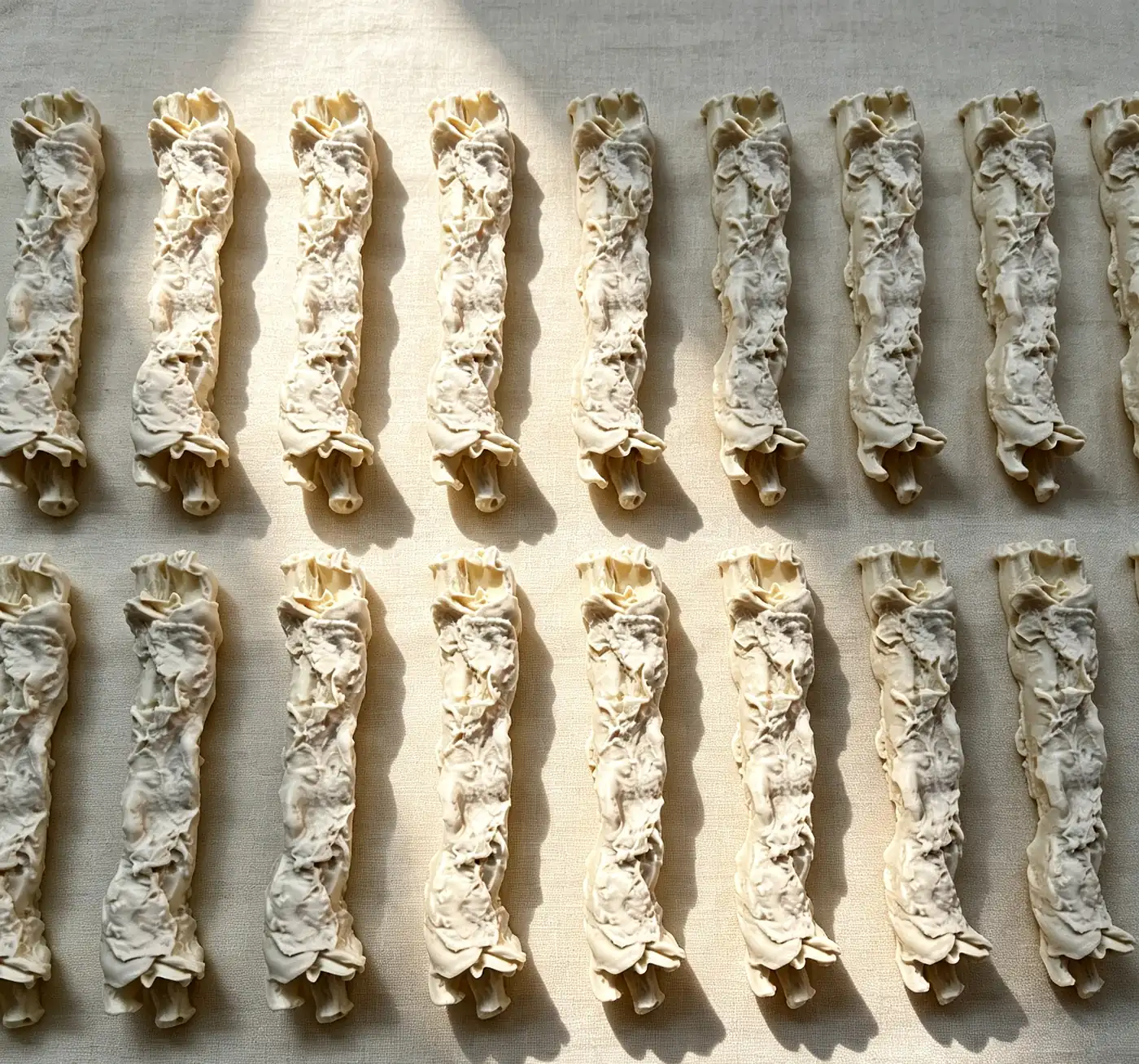
PC wins on mirror shine when cavity polish is dialed. Many retail bars lean on that gloss as a shelf signal. Silicone finishes run matte to semi-gloss depending on master finish; you can push cavity polish, but chasing true PC mirror on soft tooling is the wrong fight.
Flex wins when pieces must leave without impact. Soft platinum in roughly Shore A 25-40 lets operators peel without cracking thin walls. That matters for filled bars, thin ears, and logo wells that trap couverture. If your return reason is "stuck in mold" or "broken logo," hardness and wall design beat a shinier empty cavity photo.
Also ask how you cool. PC lines often rely on chill plates and a sharp snap. Silicone lines often cool on racks and peel by hand. If you copy a PC cycle onto a soft tray without changing labor training, operators will still tap - and you lose the flex advantage. Spec the demold method on the PO so the Shore band matches the motion your team will repeat at hour eight of a market weekend.
Case (anonymized): a DTC brand pouring 80-120 bars/day tried PC first for a 42 g bar with 0.7 mm embossed wordmark. Breakage on demold sat near 12% in week one. We cut a silicone sample at Shore A 30, logo depth 0.4 mm, walls ~3 mm, 10 mm spacing, 6 cavities. After sample pour, production MOQ 50 trays replaced the PC set for that SKU. Breakage dropped under 2%. Gloss was slightly softer; Instagram photos still cleared - customers complained about broken bars, not shine.
Logo Depth and Undercuts Decide the Tool
Keep chocolate logo emboss shallow when you can - often 0.3-0.6 mm for clean fill and release. Deeper marks need draft, radius, and a Shore band that flexes. Undercuts that look fine in CAD become scrap on rigid PC because chocolate has nowhere to go on snap.
Wall thickness in the 2.5-5 mm band and cavity spacing in the 8-20 mm band keep trays flexible without tearing webs. Dense PC sheets can pack cavities tighter; dense silicone sheets punish you with flex stress. Start cavity count from daily output, not catalog density - see how many cavities.
Why Small Brands Buy Silicone First
Custom PC for a new silhouette can lock cash into a rigid tool before sell-through is proven. Silicone at MOQ 50 lets you shoot packaging, run markets, revise logo depth, and change cavity count without paying for a second PC set every time marketing tweaks the mark.
Quote speed matters on launch calendars. Complete files usually get a RUUIPON reply in about 24 hours. Prototype in 3-7 days after approval means you can pour real couverture before you print labels. Skip that and you repeat the first-order mistakes in first-order mistakes.
Food path: name US vs EU on the RFQ so docs match retail. Primer: FDA vs LFGB. Cost framing when both shops send PDFs: cost guide and how to read a silicone mold quote.
Buy-First Decision Table
| Your situation | Buy first | Why |
|---|---|---|
| Deep logo, undercut, or textured skin; < few hundred bars/week | Silicone | Flex demold + MOQ 50 revision path |
| Shallow clean mark; mirror gloss is the brand; operators already on PC | Polycarbonate | Snap demold and shine already trained |
| Seasonal shape that changes every quarter | Silicone | Faster redesign than new PC each season |
| Stable SKU, high daily cavity count, years unchanged | PC (or hybrid later) | Rigid tool economics catch up at volume |
| Need FDA/LFGB sample pour before labels print | Silicone sample first | Prove demold before packaging spend |
| Unsure which wins | Silicone prototype | 3-7 day sample beats guessing on PC cash |
Hybrid Path After Sell-Through
Many brands start on silicone, lock the silhouette after sample approval (after you approve the sample), then evaluate PC for SKU two once weekly volume is stable and gloss becomes a wholesale requirement. That sequence protects cash without blocking a future rigid line.
A practical hybrid looks like this: silicone covers seasonal drops and logo experiments at MOQ 50; PC covers the one hero bar that never changes and needs mirror finish for wholesale trays. Keep CAD revision numbers clean so you do not pour silicone from an old logo while PC sheets ship a new one. When you migrate, re-teach operators - peel muscle memory does not transfer to snap demold without scrap.
If you also run gummies or soft gels on the same launch calendar, soft tooling logic overlaps - see custom silicone gummy molds for gel Shore and cavity notes - but do not assume one Shore band fits chocolate and pectin the same week. Separate trays, separate hardness, separate sample pours.
What to Spec on Day One
- Finished piece weight and tolerance (grams, not just outer silhouette).
- Logo depth target in mm - stay in 0.3-0.6 mm when possible.
- Demold method you want operators to use: flex peel vs snap.
- Shore A band for silicone (often 25-40 for chocolate) - see Shore guide.
- Food-contact market and docs needed.
- Daily output so cavity count matches labor - use the RFQ template.
If you are stuck between a PC quote and a silicone quote for the same bar, send both PDFs, the STEP, and target grams to [email protected], WhatsApp +86 135 3006 2969, or /contact. We will tell you which tool to buy first - and when silicone is the wrong spend.
Ready to order custom silicone molds?
Free quote for OEM/ODM projects. MOQ 20 · Prototype 3-7 days · FDA/LFGB available.