
Silicone vs Plastic Molds for Chocolate Production Brands
Silicone vs plastic chocolate molds for production brands - flex demold vs rigid snap, Shore A bands, logo depth, scrap rates, and when plastic still wins on gloss.
 Kyler Yang · Founder7 min read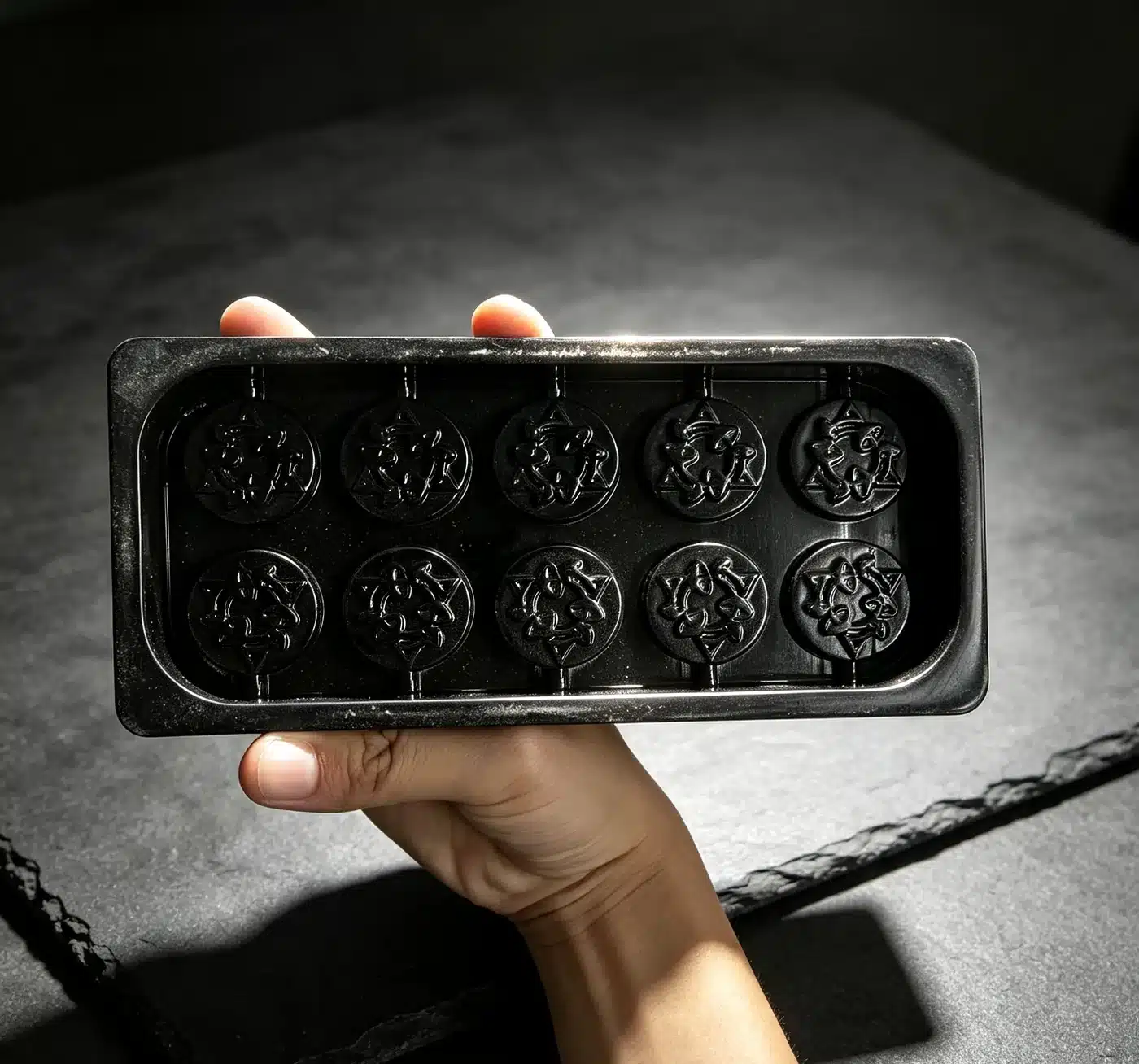
On this page
A production chocolate brand called after Saturday markets: polycarbonate-style plastic sheets looked shiny empty, then tempered couverture hung in 0.75 mm letter wells. Operators tapped, ears chipped, and half the weekend stock never left the cavity clean. They blamed temper. The cavity was rigid and the mark was too deep for a snap demold. Silicone vs plastic molds for chocolate is a labor decision before it is a shine decision.
If you are choosing first tooling for a brand bar, start from demold method, logo depth, and scrap - not from empty-cavity photos. Empty trays sell on Instagram. Production trays sell on how many bars leave the cavity without a bamboo stick.
Stuck Chocolate Is Usually the Wrong Tool
Plastic (hard polycarbonate or similar rigid sheets) trains a fill-cool-snap cycle. Silicone trains a flex peel. Mixing those habits burns product. New hires copy the tap motion from a phone video and chip thin walls faster than you can re-teach. Tooling that needs a perfect operator is scrap waiting for a staffing change.
Log one weekend honestly before you reorder. Count stuck pieces, chipped ears, minutes per tray, and how many times someone reached for a tool. If the tool count climbs after lunch when hands are tired, the cavity is fighting the demold method - not the temper curve. Temper problems leave bloom or soft centers. Clean chocolate that will not leave a letter well is geometry and stiffness.
RUUIPON builds custom silicone chocolate molds for brands that need custom geometry at MOQ 50, prototypes in about 3-7 days after CAD approval, and production commonly in a 2-4 week window after sample sign-off. Complete briefs usually get a quote within about 24 hours.
You Are Choosing Labor, Not "Better Chocolate"
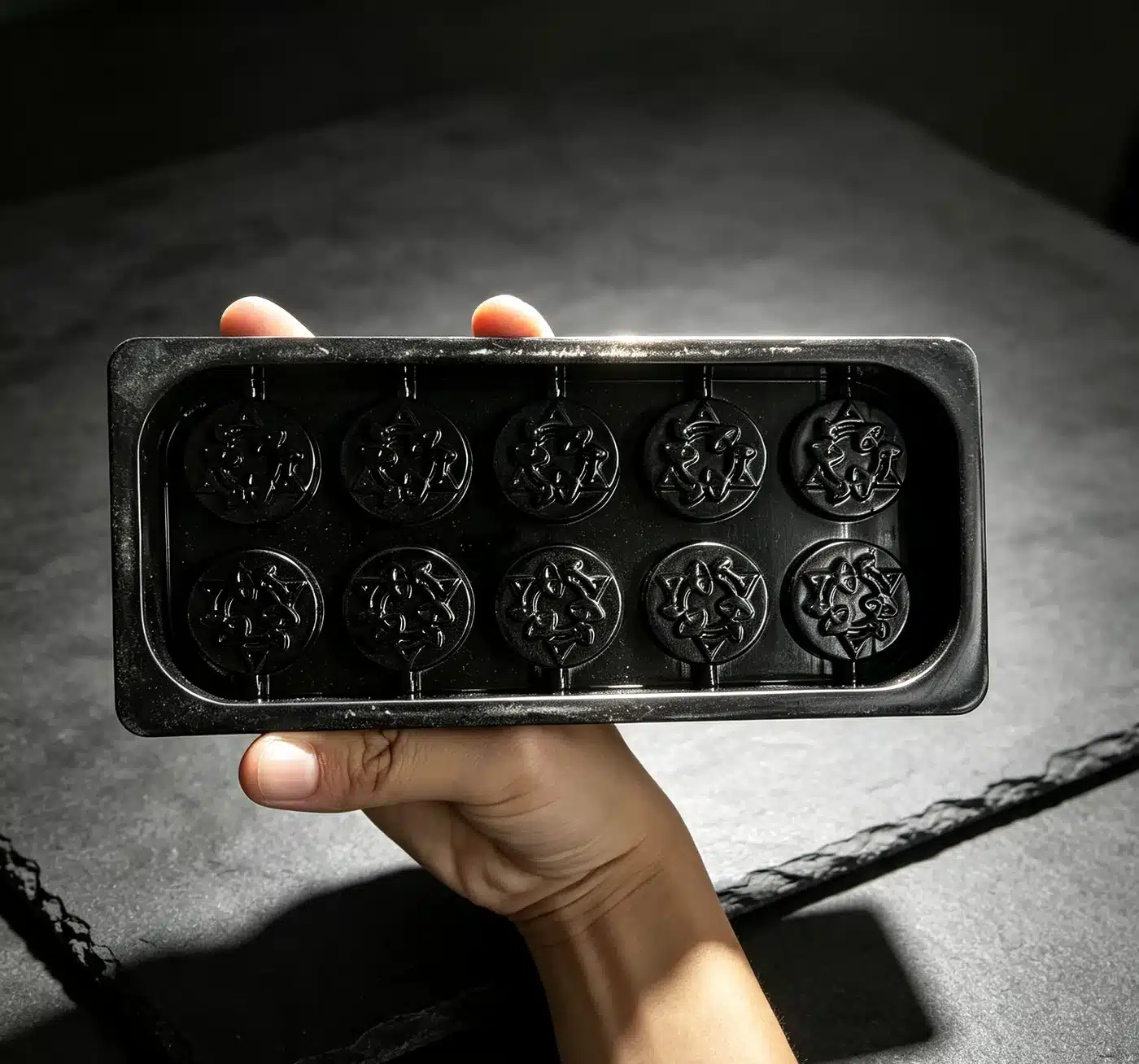
Plastic wins on mirror gloss when cavity polish is dialed. Many wholesale buyers treat that shine as a shelf signal. Silicone finishes run matte to semi-gloss depending on master finish. Chasing true PC mirror on soft tooling is the wrong fight if your return reason is stuck bars or broken ears. Customers complain about broken logos long before they complain about a slightly softer sheen in a phone photo.
Flex wins when pieces must leave without impact. Soft platinum in roughly Shore A 25-40 lets operators peel without cracking thin walls. That matters for filled bars, thin ears, and logo wells that trap couverture. If you already run shallow plastic molds and your new mark is also shallow, staying on plastic can be faster - same trained snap cycle. Do not switch materials just because a catalog photo looks different.
Cool method matters. Plastic lines often use chill plates and a sharp snap. Silicone lines often cool on racks and peel by hand. Copy a plastic cycle onto a soft tray without changing training and operators will still tap - you lose the flex advantage. Spec demold method on the PO so Shore matches the motion your team will repeat at a farmers market or co-packer line.
Case (anonymized): a US brand pouring ~90-140 bars/day tried rigid plastic first for a 38 g bar with 0.7 mm embossed wordmark. Demold breakage sat near 11% in week one. We cut a silicone sample at Shore A 30, logo depth 0.4 mm, walls ~3 mm, spacing ~12 mm, 8 cavities. After sample pour with their temper, MOQ 50 production replaced plastic for that SKU. Breakage dropped under 2%. Gloss was slightly softer; customer complaints were about broken bars, not shine. Related rigid-vs-flex notes: silicone vs polycarbonate chocolate molds.
Logo Depth and Shore Decide Release
Keep chocolate logo emboss shallow when you can - often 0.3-0.6 mm for clean fill and release. Deeper marks need draft, radius, and a Shore band that flexes. Undercuts that look fine in CAD become scrap on rigid plastic because chocolate has nowhere to go on snap. Marketing renders love deep engraving. Production loves shallow marks that leave on a peel.
Wall thickness in the 2.5-5 mm band and cavity spacing in the 8-20 mm band keep trays flexible without tearing webs. Dense plastic sheets can pack cavities tighter; dense silicone sheets punish you with flex stress. Start cavity count from daily output and cool time, not catalog density. A 24-up tray you peel clean twice beats a 48-up sheet that needs pry on every other bar.
Hardness primer: Shore hardness guide. Put the band on the quote. Blank Shore is how shops ship stock that feels "premium hard" and still holds couverture in letter wells.
When Plastic Still Wins
Stay on plastic when mirror gloss is non-negotiable, the mark is shallow and stable, and operators already snap cleanly with low scrap. High daily cavity counts on an unchanged hero bar can favor rigid tool economics after sell-through is proven. Seasonal shapes that revise every quarter usually waste plastic cash - silicone MOQ 50 revisions cost less than a new rigid set each drop.
A practical hybrid looks like this: silicone covers seasonal drops and logo experiments; plastic covers the one hero bar that never changes and needs mirror finish for wholesale trays. Keep CAD revision numbers clean so you do not pour silicone from an old logo while plastic sheets ship a new one. When you migrate, re-teach operators - peel muscle memory does not transfer to snap demold without scrap.
Food docs belong on the quote either way. Name US vs EU so FDA-facing or LFGB-style packs match retail. Detail: FDA vs LFGB.
Silicone vs Plastic Decision Table
| Your situation | Buy first | Why |
|---|---|---|
| Deep logo, undercut, or textured skin; < few hundred bars/week | Silicone | Flex demold + MOQ 50 revision path |
| Shallow clean mark; mirror gloss is the brand; team already on plastic | Plastic / PC | Snap demold and shine already trained |
| Seasonal shape that changes every quarter | Silicone | Faster redesign than new plastic each season |
| Stable SKU, high daily count, years unchanged | Plastic (or hybrid later) | Rigid economics catch up at volume |
| Need sample pour before labels print | Silicone sample first | Prove demold before packaging spend |
| Unsure which wins | Silicone prototype 3-7 days | Beats guessing on rigid cash |
If you are still on the fence, run one weekend on the current tool with a scrap log: stuck pieces, chipped ears, minutes per tray, tool uses. Bring those numbers to the RFQ. We would rather quote against your scrap rate than against a pretty empty-cavity photo.
MOQ 50 Path Before You Print Sleeves
Prototype first. Pour real couverture at your real cool time before you lock art and sleeves. RUUIPON prototypes typically land in 3-7 days after CAD approval. Approve dimensions, flash, demold, and piece weight in one email. Then production at MOQ 50 usually follows in a 2-4 week band.
Treat the sample as a line trial: same temper, same fill weight, same peel or snap motion you will use on Saturday. If the sample only looks good empty on a desk, you have not tested demold. A cheap unit price with blank Shore and no sample line is not a production win - it is a remake waiting for your busiest weekend. Compare NRE, sample, and production lines on one page before you pick the lower unit price.
What to Spec Before You Buy
- Finished piece weight and tolerance (grams, not just silhouette).
- Logo depth target in mm - stay in 0.3-0.6 mm when possible.
- Demold method: flex peel vs snap.
- Shore A band for silicone (often 25-40 for chocolate).
- Food-contact market and docs needed.
- Daily output so cavity count matches labor - use the RFQ template.
If you are stuck between a plastic quote and a silicone quote for the same bar, send both PDFs, the STEP, and target grams to [email protected], WhatsApp +86 135 3006 2969, or /contact. We will tell you which tool to buy first - and when silicone is the wrong spend.
Ready to order custom silicone molds?
Free quote for OEM/ODM projects. MOQ 20 · Prototype 3-7 days · FDA/LFGB available.