
Edge Radius on Silicone Molds: Small Fillets That Save Tear-Outs
Edge radius on silicone molds - fillet sizes at cavity lips, web corners, and demold paths that prevent tear-outs at MOQ 50 production with Shore A 25-40 and prototype 3-7 days.
 Kyler Yang · Founder5 min read
On this page
A sharp 90° cavity lip on a Shore A 35 resin tray tears on pour 42 - not because the silicone is bad, but because stress concentrates at a zero-radius corner with no room to stretch. RUUIPON builds custom silicone molds at MOQ 50 with prototypes in 3-7 days. This guide sets edge radius minimums so your fillets survive vacuum-degassed pour, ~0.1% shrink, and daily peel cycles.
Quick answer: Spec ≥0.5 mm radius on every cavity lip and web corner; ≥1.0 mm on external tray edges and split-line roots. Pair with walls 2.5-5 mm, spacing 8-20 mm, and Shore A matched to your demold temperature - sharp CAD corners copy 1:1 into silicone and fail regardless of platinum grade.
Edge Radius Minimums in One Table
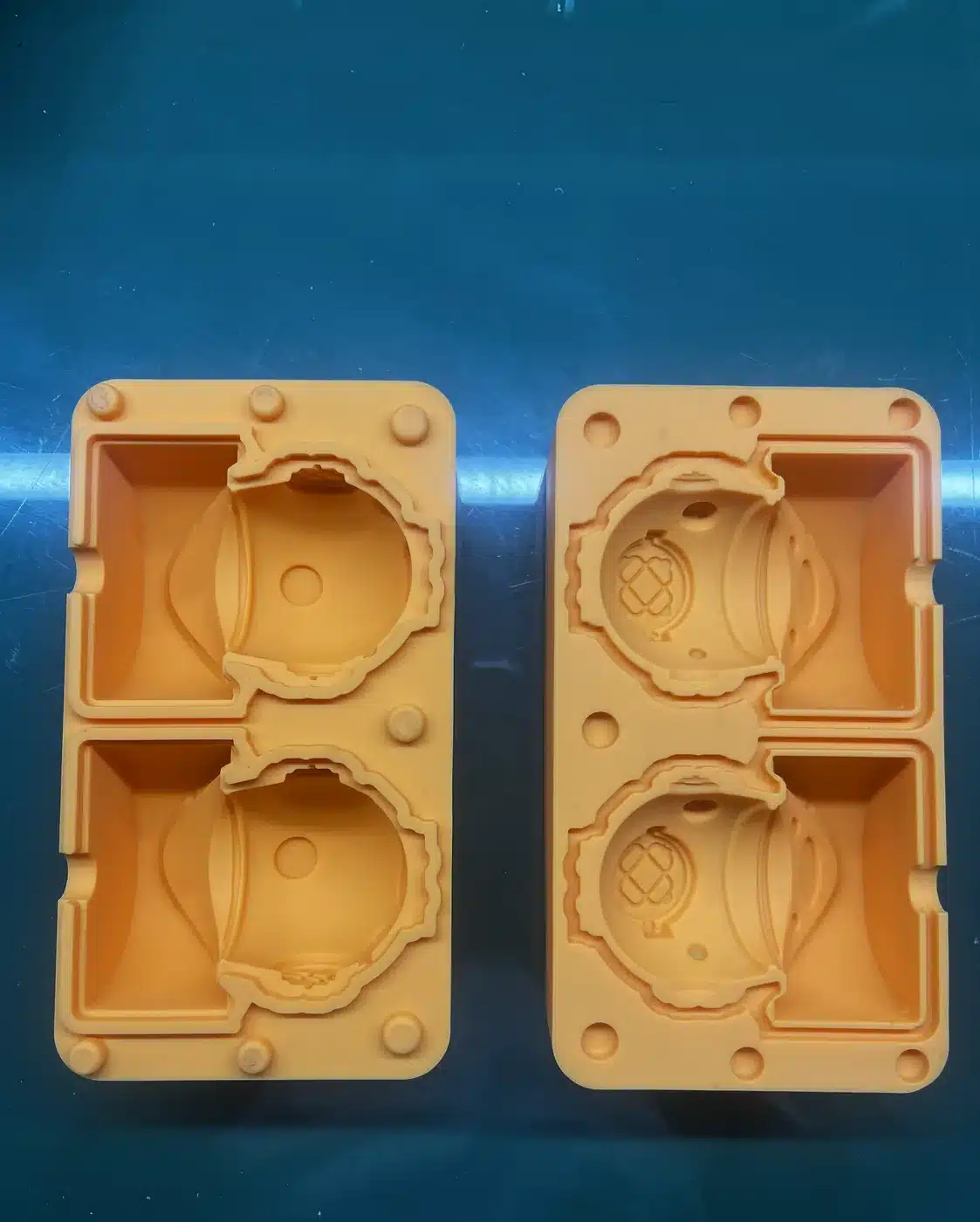
Edge radius is the fillet where two surfaces meet - measured at the mold cavity, not the cast part. Silicone stretches at radius; sharp corners tear.
| Location | Min radius | Why |
|---|---|---|
| Cavity lip (demold edge) | 0.5 mm | Peel stress spreads; prevents lip rip |
| Web-to-cavity junction | 0.5-1.0 mm | Stress between adjacent cavities |
| Tray outer perimeter | 1.0 mm | Handling + shipping flex |
| Two-part split root | 1.0 mm | Flash trim without nicking silicone |
| Embossed logo root | 0.3 mm | Detail retention - see logo limits |
Where Radius Matters on a Production Tray
Buyers focus on cavity shape; tear-outs start at geometry transitions the CAD hides in wireframe view.
- Cavity lip - where cast part exits; zero radius = knife edge on silicone.
- Floor-to-wall junction - resin and epoxy shrink pull inward; sharp root cracks on demold.
- Inter-cavity webs - thin bridges between cells; radius at both ends doubles flex life.
- Registration key roots - sharp key corners chip on repeated clamp. Registration keys.
- Pour spout bases - resin flash builds at sharp spout roots. Pour spout design.
Undercuts with sharp roots fail faster than rounded hooks - see undercut depth limits.
Radius by Feature Type & Application
| Application | Cavity lip R | Wall junction R | Notes |
|---|---|---|---|
| Resin geode / coaster | 0.5 mm | 1.0 mm | Epoxy shrink pulls - resin design tips |
| Chocolate / gummy | 0.3-0.5 mm | 0.5 mm | Warm demold; softer Shore A 20-25 |
| Cold process soap | 1.0 mm | 1.0 mm | Caustic + long cure - soap mold guide |
| Candle pillar | 0.5 mm | 0.8 mm | Hot pour wax; seam pairing - seam lines |
| Wax melt clamshell | 0.8 mm | 1.0 mm | Flex hinge needs radius at fold root |
Shore A Hardness & Radius Pairing
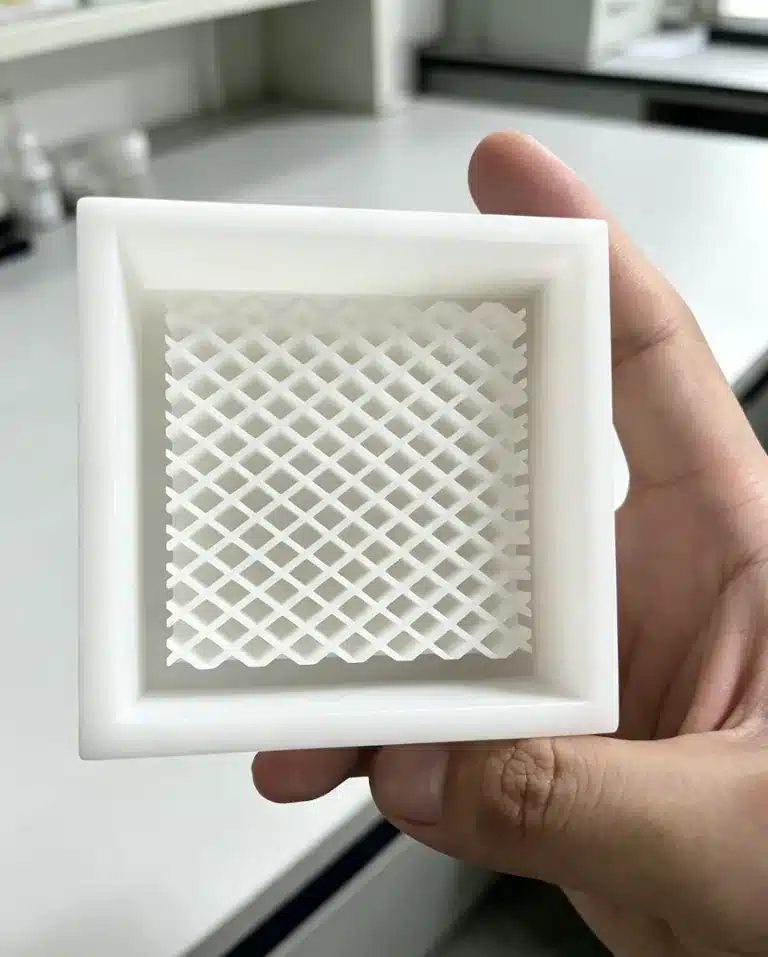
Softer silicone tolerates smaller radii because elongation is higher - but tear strength still caps how sharp you can go.
| Shore A | Min lip radius | Typical cycle before tear |
|---|---|---|
| 20-25 | 0.3 mm | 300-500 demolds (food) |
| 25-30 | 0.4 mm | 200-400 demolds |
| 30-35 | 0.5 mm | 150-300 demolds |
| 35-40 | 0.5-0.8 mm | 100-200 demolds |
| 40-50 | 0.8-1.0 mm | 80-150 demolds - stiff resin |
Full hardness selection: Shore hardness guide. Tear at demold: tear strength failures.
CAD DFM: How to Spec Fillets Before Quote
- Apply uniform fillet - use 0.5 mm minimum on all internal cavity edges in STEP/STL export.
- Mark pull direction - radius on demold path matters; radius against pull creates hidden undercut.
- Pair with draft - 2° draft + 0.5 mm radius beats either alone. Draft angles.
- Wall thickness - radius does not replace thin walls; keep 2.5-5 mm. Wall thickness.
- Flag logo exceptions - text roots may need 0.2-0.3 mm for legibility; accept shorter cycle life.
We flag zero-radius red lines on every quote - DFM red flags.
Production QC at MOQ 50
| PO line | Example spec |
|---|---|
| Silicone | Platinum cure, vacuum degassed, ~0.1% shrink |
| Cavity lip radius | ≥0.5 mm all edges - or noted exception on drawing |
| Walls / spacing | 2.5-5 mm walls, 8-20 mm cavity spacing |
| Shore A | Locked at sample - e.g. Shore A 30 ±3 |
| Sample | 5 test demolds on prototype in 3-7 days |
| Production | MOQ 50 trays after sample sign-off |
Send STEP with fillet callouts to [email protected] | Contact RUUIPON | WhatsApp +86 135 3006 2969.
Frequently Asked Questions
Will a chamfer work instead of a radius?
Chamfers help on outer tray edges but concentrate stress at the cavity lip - use a true fillet on demold paths.
Can CNC masters hold 0.3 mm radius?
Yes on aluminum or resin masters - master materials hold fine detail when toolpath stepover is ≤0.1 mm.
Does radius affect cast part dimensions?
Yes - fillet adds material at corners. Account for ~0.1% shrink plus fillet volume in fill weight calculations.
My logo needs sharp corners - what then?
Accept 0.2-0.3 mm root radius minimum; deeper emboss needs Shore A 40+ and shorter cycle life.
Will vacuum degassing fix sharp edges?
No - degassing removes bubbles, not stress concentration. Vacuum degassing guide.
MOQ with radius DFM changes?
Still MOQ 50; fillet revisions on approved CAD add 2-3 days if master re-cut is needed.
Prototype lead time?
Single-cavity sample in 3-7 days - we test peel 10× at lip before production approval.
Ready to order custom silicone molds?
Free quote for OEM/ODM projects. MOQ 20 · Prototype 3-7 days · FDA/LFGB available.