
DFM Case Study: Fixing a Logo Chocolate Mold That Would Not Demold
Silicone mold DFM case study - logo chocolate that would not demold, logo depth cut from 0.9 mm to 0.4 mm, Shore A 32 remake, MOQ 50 path, and scrap under 3%.
 Kyler Yang · Founder6 min read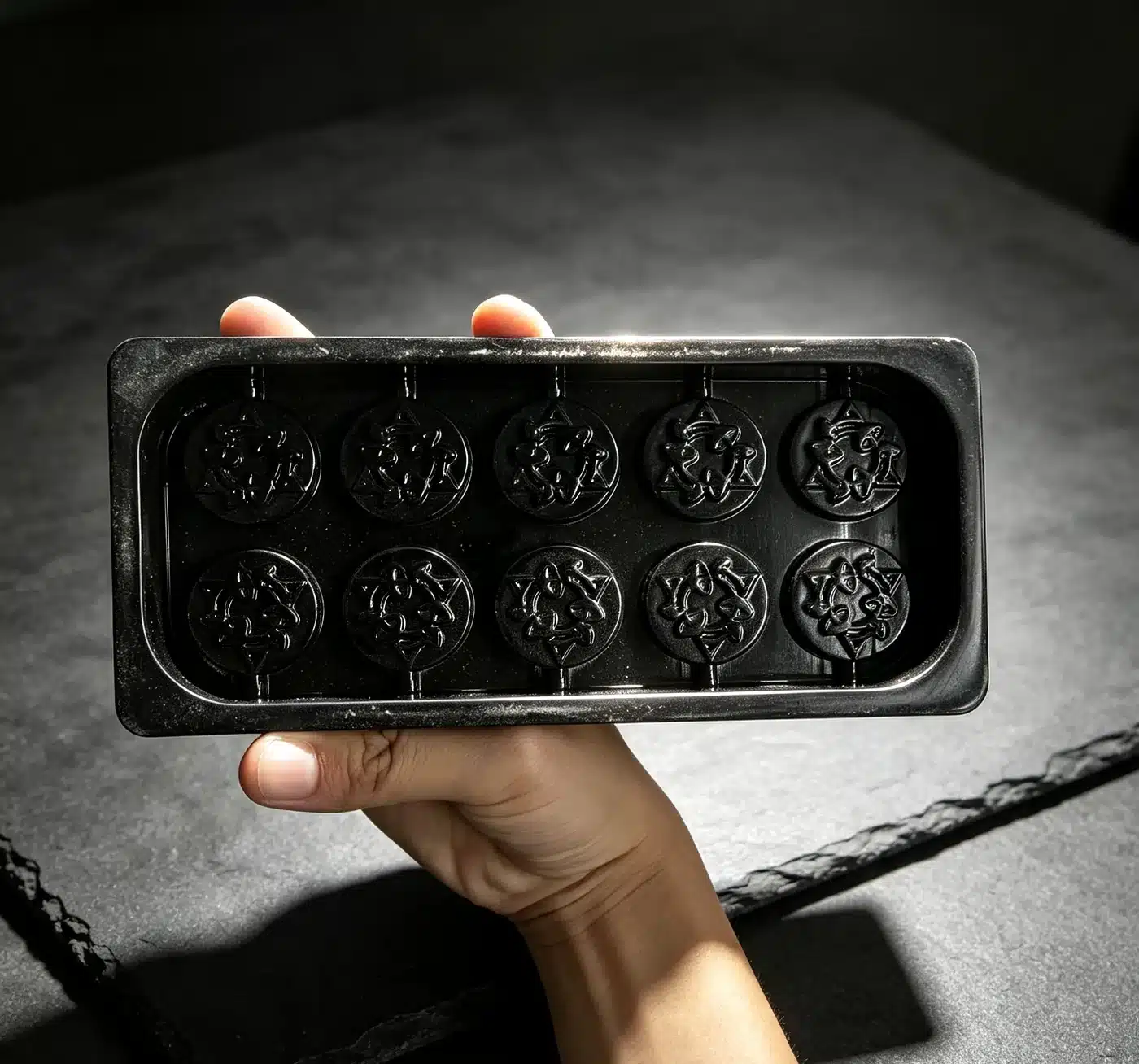
On this page
A DTC chocolate brand shipped us a tray and a weekend of angry Slack screenshots. Tempered couverture sat in the logo wells. Operators tapped, then flexed, then used a bamboo stick. Ears chipped. Market stock ran short by Sunday noon. They thought temper drifted. Durometer and calipers said otherwise: the logo was too deep and the silicone too stiff for a flex peel.
This silicone mold DFM case study is the anonymized remake path we used - numbers first, then Shore, then sample - so you can spot the same failure before you print sleeves.
Stuck Logo Is a Geometry Problem, Not a Temper Mystery
Temper problems leave bloom or soft centers. This SKU left clean chocolate that simply would not leave 0.9 mm letter wells. Rigid pry habits started. Scrap climbed. Marketing still wanted a "deep engraved" look from a render. Deep looks good in CAD; shallow releases in production.
Weekend labor made it worse. Two new hires copied the pry motion from a phone video. Ears chipped faster than the founder could re-teach. Tooling that needs a perfect operator is not production tooling - it is a scrap machine waiting for staffing change.
RUUIPON runs custom silicone chocolate molds through a sample-first path: prototype in about 3-7 days after CAD approval, production at MOQ 50, typical production lead 2-4 weeks after sign-off, quotes on complete packs within about 24 hours.
What We Measured on the Failed Tray
Returned sample checks (shop notes):
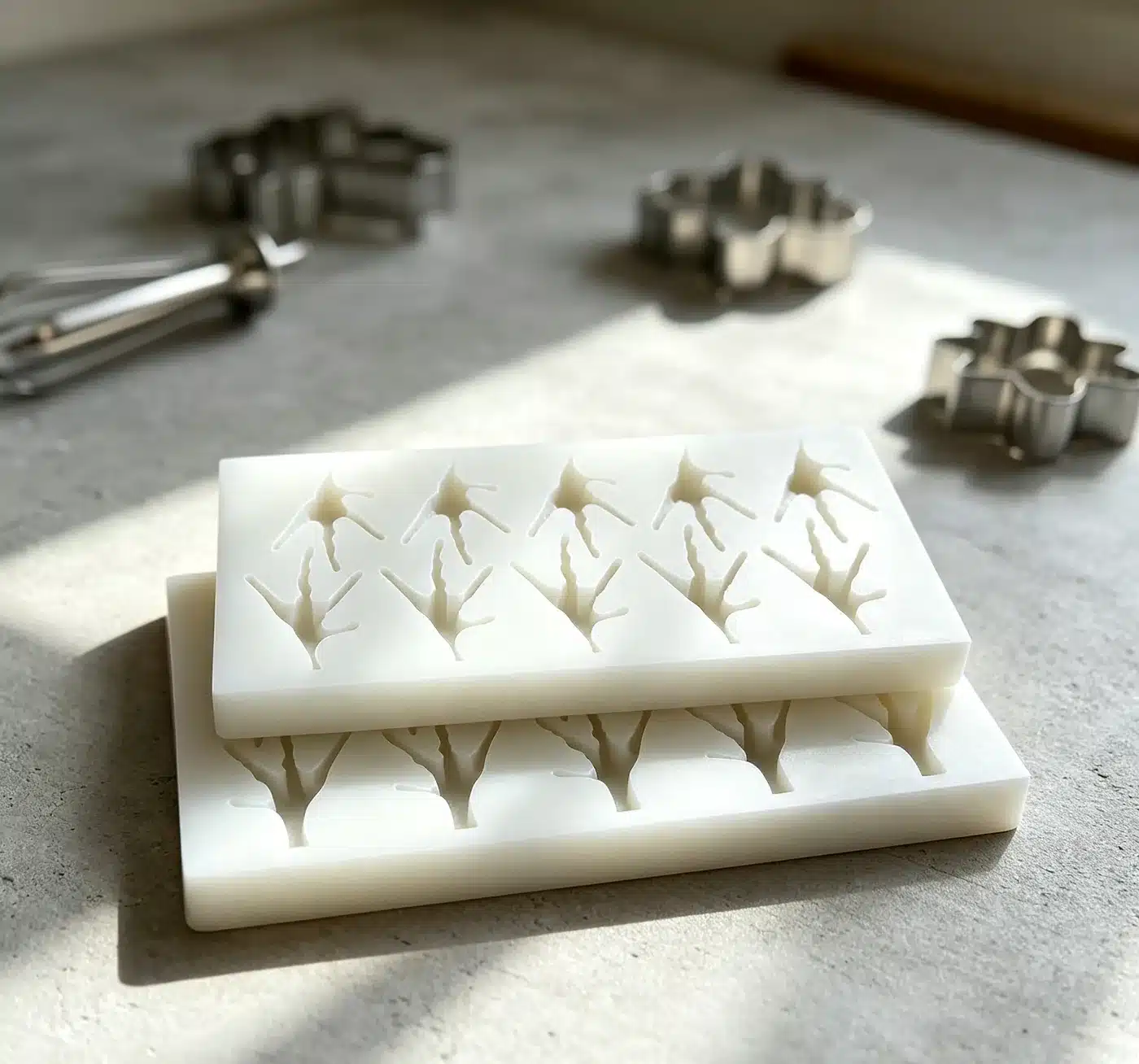
- Logo emboss depth ~0.9 mm on the wordmark, sharp inside corners.
- Durometer feel ~Shore A 50+ (stiffer than our usual chocolate flex band).
- Walls ~2.0 mm in places; cavity spacing ~7 mm - dense sheet, high flex stress.
- 6 cavities, 42 g target bar; weekend scrap from stuck/broken pieces ~18% by their count.
None of that is fixed by another temper curve. Hardness context: Shore hardness guide. Cure/grade: they had bought a mixed "food safe" lot without a named platinum path - see platinum vs tin cure.
DFM Changes That Fixed Demold
We rebuilt the master and tray with production demold as the constraint:
- Logo depth cut to 0.4 mm (inside the 0.3-0.6 mm band we prefer for chocolate emboss).
- Inside corners radiused; light draft on letter walls taller than ~1 mm effective depth.
- Shore target A 32 (inside a 25-40 chocolate flex band).
- Walls ~3.5 mm; spacing ~12 mm.
- Kept 6 cavities - output was not the bottleneck; scrap was.
Marketing kept the same wordmark silhouette. They lost "deep engraved drama" in renders and gained bars that left the tray in one peel. We also cleaned flash targets on the master so edges did not act like tiny undercuts holding couverture. Cavity count logic when you are tempted to pack denser after a remake: how many cavities.
Food docs named for US retail on the new quote - not a chat promise. Primer: FDA vs LFGB. Platinum-cure compound locked on the PO so the remake did not drift back to mixed craft stock on reorder.
Before / After Numbers
| Spec | Failed tray | DFM remake |
|---|---|---|
| Logo depth | ~0.9 mm sharp | 0.4 mm, radiused |
| Shore A | ~50+ feel | 32 target |
| Wall / spacing | ~2.0 mm / ~7 mm | ~3.5 mm / ~12 mm |
| Weekend scrap (stuck/break) | ~18% | <3% after re-teach |
| Demold method | Tap + pry | Flex peel only |
| Path | Straight catalog-style buy | Sample 3-7 days, then MOQ 50 |
Operators needed one re-teach session: stop tapping. Flex peel is the point of soft tooling. If you keep PC snap habits on silicone, you still chip ears. We timed demold on the sample: failed tray averaged tools-in-hand on most cavities; remake averaged a single peel per row with no sticks.
Piece weight stayed inside their +/-0.5 g band after the depth change because we adjusted cavity volume in CAD when we cut logo depth - do not assume shallower emboss automatically keeps grams identical without a check pour.
What We Refused to Change
We did not "solve" demold with heavier release spray as the primary fix. Spray as a permanent crutch tastes wrong and fails when staffing changes. We also refused to harden the tray further to "look more premium" - hardness was already the problem.
We refused a same-day jump to MOQ 200 before sample pour. Cash urgency is real on launch calendars; shipping 200 stiff trays faster just multiplies scrap. Low MOQ custom context: low MOQ custom silicone molds.
Marketing asked to keep 0.9 mm depth "just for hero photos" and run a second shallow tray for production. We said no for SKU one - two tools for one bar doubles training error. Shoot hero photos from the demolded bar on the remake; do not maintain a scrap tool for Instagram.
Sample Gate Before MOQ 50
Prototype poured with their couverture and fill weight. Checks: logo fill, demold force, ear integrity, piece weight. Written approval covered depth, Shore, and scrap target - process in after you approve the silicone mold sample. Production MOQ 50 followed in the normal 2-4 week band.
Sample rejection criteria we put in the email before pour: any cavity needing a tool; scrap over 5% on a 30-bar test; logo fill voids over ~10% of letter area; Shore feel outside 30-35 on our check. Clear gates beat "we'll know it when we see it."
Copy This Brief for Your Logo Bar
- Target grams and tolerance.
- Logo depth in mm - start 0.3-0.6 mm unless you accept scrap risk.
- Shore A band for flex peel (often 25-40 for chocolate).
- Wall and spacing targets; daily output for cavity count.
- Food market and docs; demold method named on the PO.
- Temper notes and fill method so sample pour matches the line.
Use the RFQ template so shops cannot invent different scopes. Read quotes with how to read a silicone mold quote and cost structure via the cost guide. Skip the first-order traps in first-order mistakes.
If your logo already sticks, include caliper depth if you can measure it, or a side photo with a scale. Guessing "about 1 mm" wastes a CAD cycle. Name whether operators currently tap, pry, or peel - that tells us how far Shore and training need to move together.
If your logo chocolate will not demold, send stuck photos, approximate depth, and the STEP to [email protected], WhatsApp +86 135 3006 2969, or /contact. We will mark which DFM changes are mandatory before MOQ 50 - usually within about 24 hours on a complete pack.
Ready to order custom silicone molds?
Free quote for OEM/ODM projects. MOQ 20 · Prototype 3-7 days · FDA/LFGB available.