
Pectin Gummy Silicone Molds: Stick, Tear, and Release Fixes
Pectin gummy silicone mold tips for stick, web tear, and release - Shore A bands, cavity spacing, emboss depth, sample pours, and when oil spray is hiding a bad tray.
 Kyler Yang · Founder6 min read
On this page
A co-packer sent us a tray that "needed more release spray every batch." Pectin gummies hung in ear corners, operators flexed harder, and webs between cavities started splitting by week three. They asked for a stickier spray recommendation. We asked for Shore A and cavity spacing instead. The tray was too stiff and too dense for pectin. Spray was masking a mold problem.
If your pectin gummy silicone mold fights you on demold, treat stick, tear, and release as tooling symptoms - not a cook mystery - until Shore, walls, and emboss are proven with a real pour.
Pectin Sticks Harder Than Gelatin - Design for It
Pectin sets differently and often grips silicone more than gelatin at the same cavity geometry. Copying a gelatin tray into a pectin SKU without changing Shore or draft is a common remake trigger. Compare the design differences in gelatin vs pectin gummy mold design before you lock CAD for a plantiform or character drop.
RUUIPON builds food-grade custom silicone gummy molds for pectin lines at MOQ 50 after sample approval. Prototypes typically land in 3-7 days after CAD sign-off; production often follows in 2-4 weeks. Quotes on complete packs usually return within about 24 hours.
Fix Shore Before You Spray Oil
Oil spray is a process patch. If every pour needs it, you will taste residue, fog photos, and still stick when a temp worker skips a pass. Soften the tray first. For sticky pectin we often specify roughly Shore A 20-30 so operators can flex peel without prying. Harder bands (~40+) look premium in a catalog photo and still hold gel in undercut ears.
Put Shore on the quote and the PO. Blank "food silicone" is how shops ship whatever stock is on the shelf. Hardness primer: Shore hardness guide. Use platinum-cure for food production life; tin-cure craft trays often stick sooner under warm pectin. See platinum vs tin cure.
Also watch tray temperature at demold. Pectin that leaves clean at room temp can hang when trays stay warm from a fast cycle. Soft Shore helps, but so does a cool rack protocol - do not blame the rubber for a line that peels five minutes early every shift.
Case (anonymized): a EU brand running pectin bears at 3.5 g target used a 36-up tray that felt ~Shore A 45 on our durometer check of a returned sample. Demold scrap sat near 16%, mostly stuck ears. We remade at Shore A 24, walls ~3.2 mm, spacing ~14 mm, facial emboss 0.35 mm with light draft. After sample pour with their cook, MOQ 50 production cut scrap under 3% and they dropped spray to an optional light pass on humid days only.
Web Tears Come From Spacing and Flex Stress
Dense sheets tear when operators peel sticky pieces. Keep cavity spacing in the 8-20 mm band for pectin when you can. Walls in the 2.5-5 mm band flex without razor-thin webs. If you need more pieces per hour, add a second tray or a second pour cycle - do not crush spacing until webs survive 200 flexes.
Watch edge tears too. Thin outer borders curl and crack when trays hang half-off a rack. Spec a rim that operators can grip without pinching the first row of cavities. A 48-up sheet with a 4 mm border looks efficient and fails at the grip point by week two.
Cavity count should follow cool time and labor, not photo density. Layout: how many cavities. Small-batch path that keeps revision cash low: low MOQ custom silicone molds.
Emboss Depth and Draft on Characters
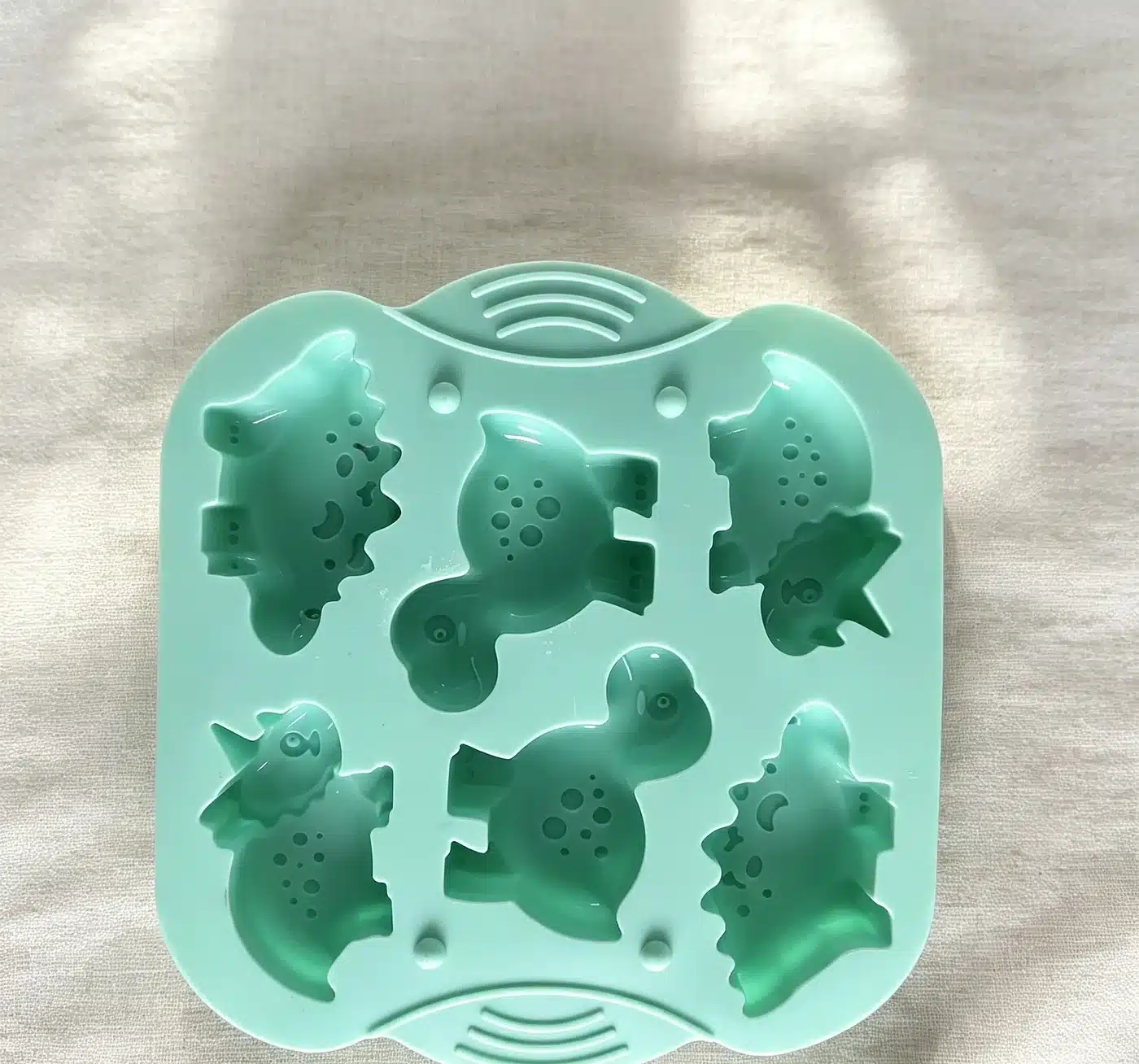
Deep facial lines look great in CAD renders and trap pectin after cool-down. Keep emboss in the 0.3-0.6 mm band when marketing allows. Add draft on vertical walls taller than about 5 mm. Sharp undercuts on ears and limbs are scrap generators on stiff trays - soften Shore or open the undercut before you train pry habits.
If marketing insists on a deep smile line, isolate that feature in a shallow band and thicken the surrounding cavity wall so flex peels the piece as a unit. Do not deepen every facial stroke "for Instagram" and then wonder why ears stay behind. Photograph the demolded piece - customers buy the candy, not the empty cavity render.
Food path: name market on the RFQ so docs match retail. Primer: FDA vs LFGB. When comparing quotes that bury Shore or sample lines, use how to read a silicone mold quote.
Symptom to Fix Table
| What you see | Likely cause | Fix to try first |
|---|---|---|
| Pieces hang in corners / ears | Shore too hard or emboss too deep | Shore A 20-30; emboss 0.3-0.6 mm |
| Webs tear on flex | Spacing too tight or walls too thin | 8-20 mm spacing; walls 2.5-5 mm |
| Every pour needs oil spray | Geometry/Shore fighting pectin | Remake tray; spray as backup only |
| Dose weight drifts tray to tray | Cavity volume inconsistent or warped sheet | Sample check grams; reject warped stock |
| Stick worsens after weeks | Wrong cure/grade aging | Platinum food grade remake |
| Gelatin tray reused for pectin | Wrong demold assumptions | New Shore + draft for pectin |
Log symptoms for one week before you redesign everything. If stick only happens on humid days, check cool time and spray first. If stick happens every pour on every cavity, Shore and emboss are the first calls - not another drum of oil.
Sample Pour Checklist (Do Not Skip)
Pour your production pectin formula at your production cool time. Photos of empty cavities do not catch stick. Check:
- Piece weight vs target (grams, not "looks right").
- Corner release without tools.
- Web integrity after 20+ flex peels on the sample tray.
- Flash and cavity edge sharpness that could cut operators or scar pieces.
- Taste/smell after a light wash - residual release or wrong grade shows up here.
Approve in writing with numbers - see after you approve the silicone mold sample. Vague "looks good" approvals are how sticky trays reach MOQ 50. If the sample needs heavy spray to pass, reject the sample - do not approve and hope production rubber feels different.
Order Path That Sticks
Send STEP or artwork, target grams, pectin notes, Shore preference, cavity count target, and food market. Use the RFQ template so NRE, sample, and production stay on one page. Cost context: cost guide. Skip the photo-only and blank-Shore traps in first-order mistakes.
If you already have a failing tray, ship or photo the stuck cavities with a ruler in frame. Depth guesses from memory waste a revision round. Tell us cool minutes, spray habit, and whether gelatin ever ran in the same tool - that history shortens DFM.
Email [email protected], WhatsApp +86 135 3006 2969, or /contact with your stick photos and current tray. We will say whether Shore, spacing, or emboss is the first fix - usually within about 24 hours on a complete pack - then prototype before you buy another drum of release spray.
Ready to order custom silicone molds?
Free quote for OEM/ODM projects. MOQ 20 · Prototype 3-7 days · FDA/LFGB available.