
How to Spot Shipping Damage on Custom Silicone Mold Deliveries
Spot shipping damage on custom silicone mold deliveries - crease lines, cavity crush, warp, and QC steps before you accept MOQ 50 production trays from export cartons.
 Kyler Yang · Founder5 min read
On this page
A 12-cavity gummy tray arrives with a 2 mm crease across the center web - every pour from that row sticks until you scrap the mold or fight flash for 200 cycles. RUUIPON ships custom silicone molds at MOQ 50 with prototypes in 3-7 days. This guide shows what shipping damage looks like on platinum silicone so you inspect before production use, not after scrap piles up.
Quick answer: Inspect within 48 hours of delivery - photograph outer carton, inner nest, and each tray under flat light. Reject trays with permanent cavity crush >0.5 mm, web tears, or Shore A shift from sample. Good export packing uses nested trays, corner protectors, and no point-load stacking above 3 kg per carton layer.
Shipping Damage Signs in One Table
| Damage type | Visual sign | Production impact |
|---|---|---|
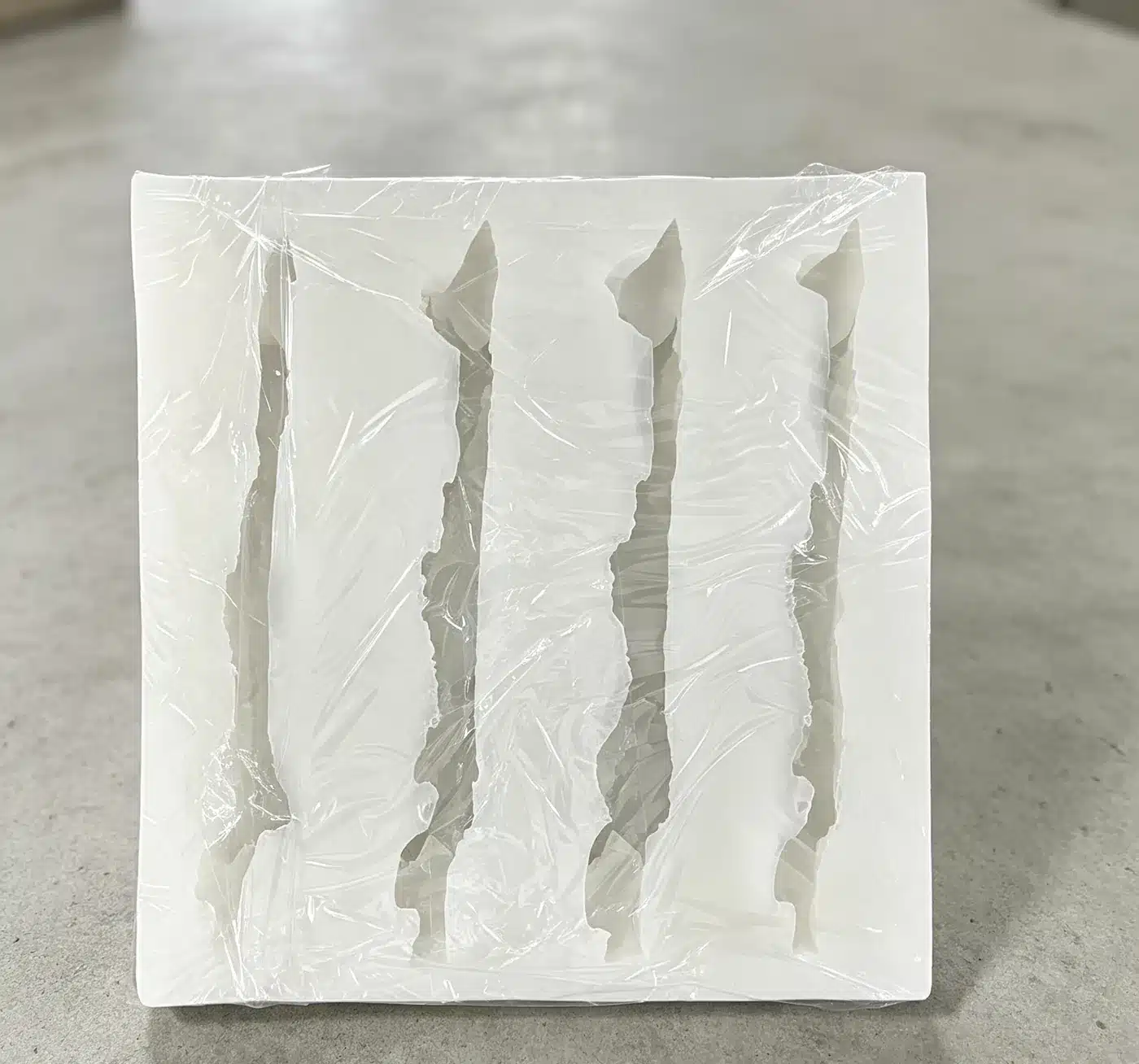
| Cavity crush | Dimple or flat spot in cavity floor | Uneven cast thickness; resin pools |
| Web tear | White stress line between cavities | Leak path; tear propagates on demold |
| Edge crease | Permanent fold on tray flange | Warp; poor registration on depositor |
| Corner nick | Missing silicone at outer radius | Flash at split; handling snag |
| Surface scuff | Matte patch on glossy cavity | Cast finish change - cosmetic only |
| Hardness shift | Shore A ±5 vs sample | Demold behavior change - rare in transit |
Damage Types You See on Mold Deliveries
Silicone is flexible - that helps demold but hides crush until you pour. Damage categories:
- Compression damage - weight stacked on thin webs; common when cartons nest poorly. Tray nesting.
- Impact damage - corner drop deforms registration keys. Registration keys.
- Fold damage - tray bent past elastic limit; crease stays white.
- Heat damage - rare; silicone stable to 200°C short exposure. Heat limits.
- Contamination - oil or tape residue on food molds. Food-grade standards.
Compare to how we pack for export: export packing guide.
Unboxing Inspection Checklist
| Step | Action | Pass criteria |
|---|---|---|
| 1 | Photo outer carton - all six faces | No crush >10 mm depth on corners |
| 2 | Count trays vs packing list | Qty matches PO - MOQ 50 or agreed count |
| 3 | Lay tray on flat granite/marble | All four corners touch; no rock >0.3 mm |
| 4 | Backlight each cavity | No crush dimple; uniform wall 2.5-5 mm |
| 5 | Flex test - gentle peel simulation | No white stress at webs; no tear start |
| 6 | Compare to approved sample | Shore A, color, cavity dimensions ±0.2 mm |
| 7 | Test pour 1 cavity (optional) | Clean release matches sample demold |
Cavity Crush & Web Tear Assessment
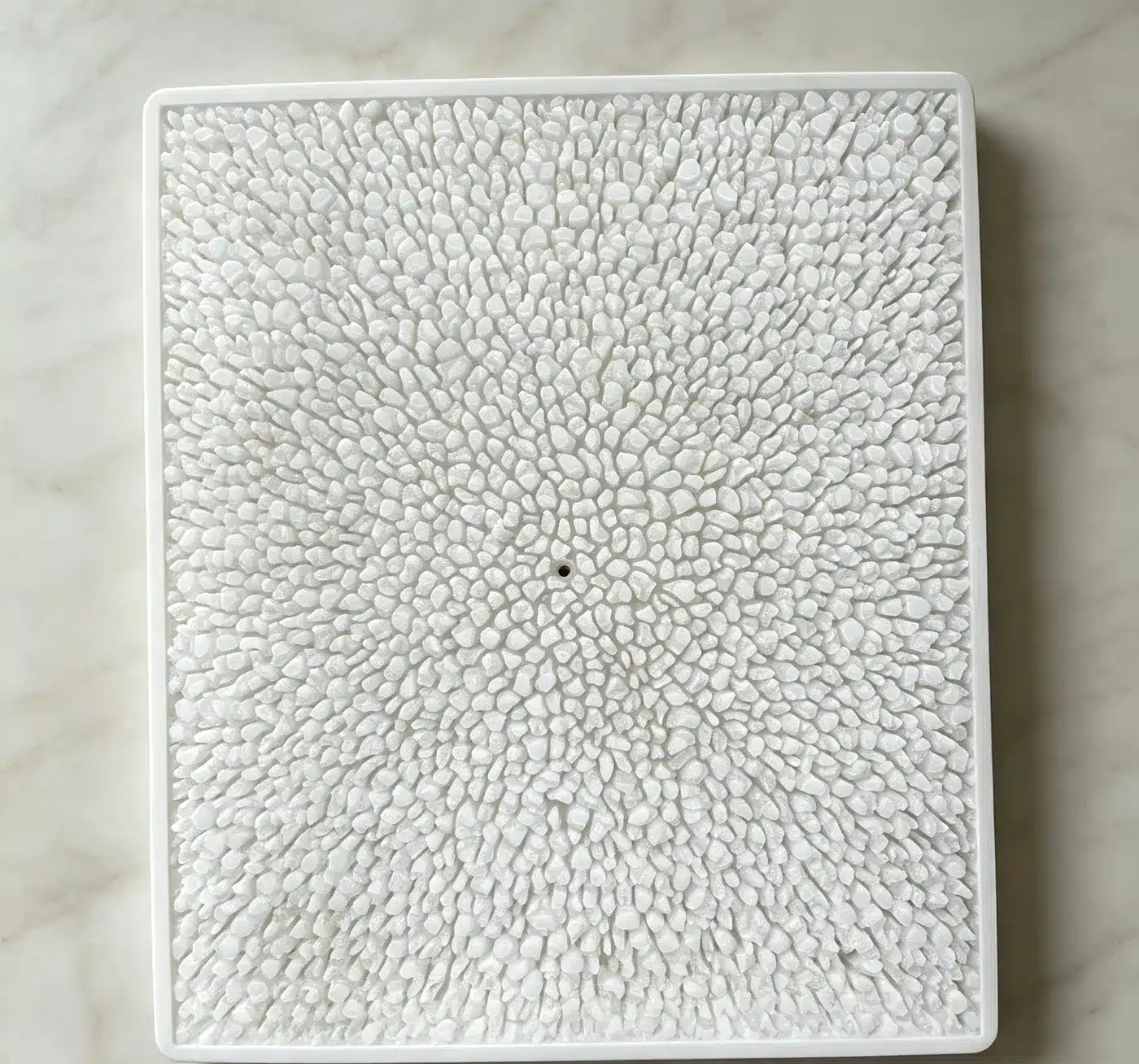
Crush depth measurement separates cosmetic scuff from production reject.
| Crush depth | Verdict | Action |
|---|---|---|
| <0.2 mm | Accept | Cosmetic; no cast impact on food/resin |
| 0.2-0.5 mm | Conditional | OK for wax/soap; reject for chocolate logos |
| 0.5-1.0 mm | Reject | Document + replacement request |
| >1.0 mm or web tear | Reject full tray | Do not run production - tear propagates |
Thin walls crush first - spec 2.5-5 mm on quote. Wall thickness. Layout density matters: cavity spacing 8-20 mm.
Warp & Crease Recovery Tests
Some transit warp recovers in 24-48 hours at room temperature; permanent crease does not.
- Rest flat 24 h - store tray flat, not rolled; check rock again.
- Warm recovery (food molds only) - 40°C oven 30 min, cool flat; do not exceed food-grade limits.
- Crease white line - if visible after rest, silicone fibers broke - reject.
- Registration check - mate keys on two-part molds; gap >0.3 mm = reject.
Storage after receipt: warping prevention.
Documenting Claims Before MOQ 50 Production
| Document | Why supplier needs it |
|---|---|
| Carton photos (6 faces) | Proves carrier vs factory packing fault |
| Tray serial / PO line | Trace vacuum-degassed batch |
| Caliper crush depth | Objective reject threshold |
| Sample side-by-side photo | Proves deviation from approved prototype |
| Test pour result (if run) | Shows demold failure linked to damage |
Email claim package to [email protected] within 5 business days of delivery. Import context: importing from China. Sample approval baseline: sample checklist.
Frequently Asked Questions
Should I inspect every tray in a MOQ 50 shipment?
Yes - spot-check 100% for flatness and crush; full cavity inspect on 10% random sample minimum.
Can crushed cavities be repaired?
No reliable field repair - silicone patch delaminates on demold. Replace the tray.
Does vacuum degassing prevent shipping crush?
Degassing improves internal quality - it does not add crush resistance. Packing design does.
Who pays if carrier crushed the carton?
Document at receipt; we support replacement PO for factory-attributable packing failures.
Will a warped tray flatten under depositor clamp?
Light warp may; permanent crease transfers to cast - reject before line setup.
Prototype sample vs bulk - same packing?
Sample ships in rigid mailer; bulk MOQ 50 uses nested cartons - inspect both on arrival.
Lead time on replacement trays?
Typically 2-3 weeks production after claim approval - prototype path is 3-7 days for revised geometry only.
Ready to order custom silicone molds?
Free quote for OEM/ODM projects. MOQ 20 · Prototype 3-7 days · FDA/LFGB available.